
BUSINESS
Tesco Restricts 114 Additives While UPF Stays Undefined
Tesco now restricts 114 own-brand additives, yet UK ministers still will not define ultra-processed food.

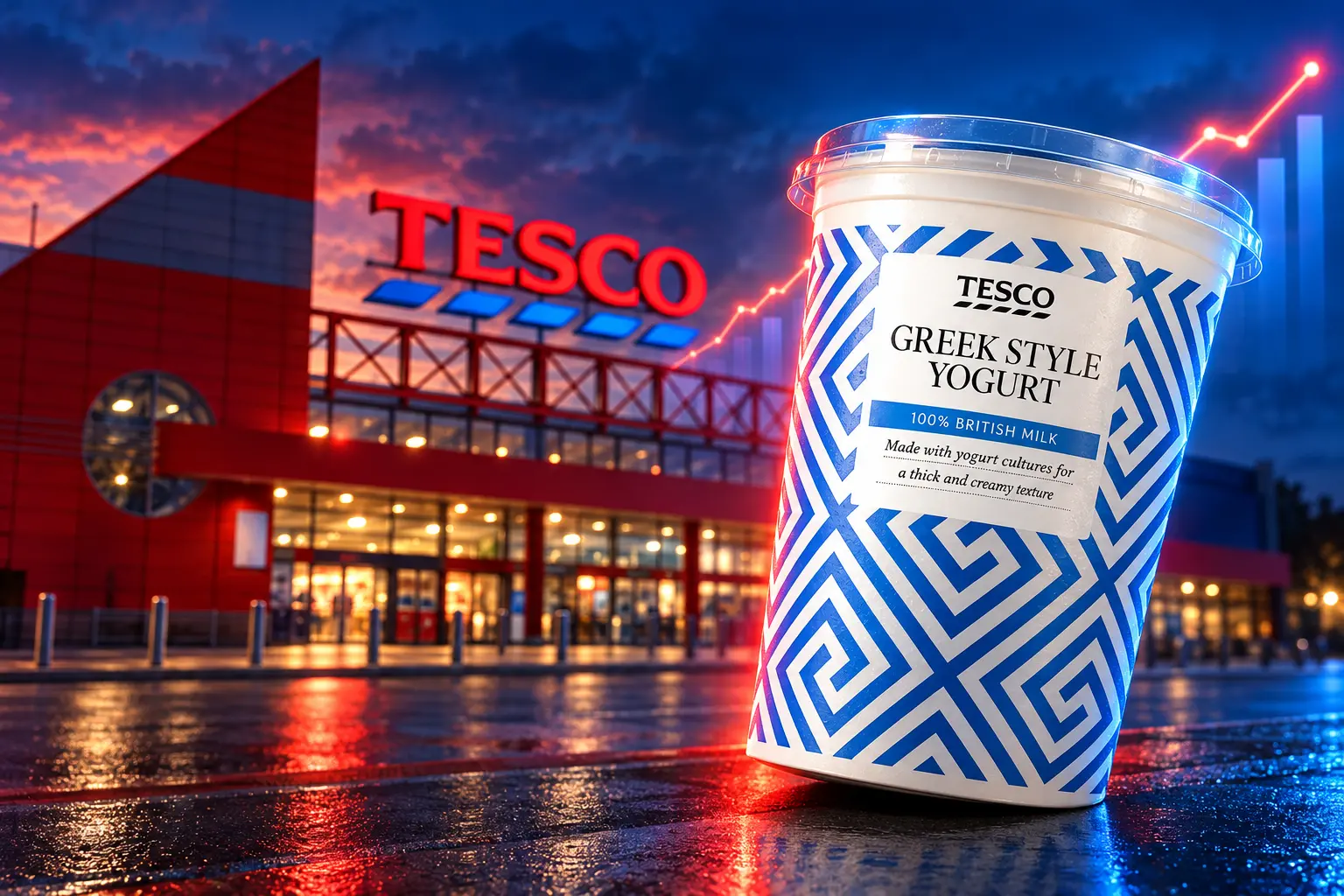
Tesco has raised the number of additives banned or restricted in its own-brand food to 114, up from 65 the year before. The UK’s largest supermarket put that list at the centre of its reply to shopper worry about ultra-processed food, even though ministers still refuse to define UPF in law.
The rules bind the recipes Tesco writes. They do not rewrite the branded goods in the same aisle, and they do not settle what ultra-processed means on a pack.
Tesco Now Restricts 114 Own-Brand Additives
The 114 figure is not a one-week stunt. Tesco already logged 114 additives in its 2026 sustainability report, up from 65 the year before, a rise of 49 names. Alice Ritchie, head of healthy and sustainable diets, then took the same number to customers in September 2026, tying it to ultra-processed food rather than only to salt, sugar and fat.
Tesco said over 80% of customers tell it they are trying to eat fewer ultra-processed foods, and that they find the category hard to shop. The retailer wants own-brand suppliers to reach first for “kitchen cupboard” ingredients, then use additives only where they are needed for food safety, shelf life or quality, and only in the minimum amount.
THE 114 IN BRIEF
- The list: 114 additives are banned outright from Tesco own-brand food or sit under extra limits, up from 65 the year before.
- The outright bans: Tesco names artificial colours, aspartame and monosodium glutamate as barred from those lines.
- Still in play: Mono- and diglycerides of fatty acids are restricted and marked for more work with suppliers, not wiped from the book.
- The shopper tool: Tesco.com now lets customers filter for products without additives, next to allergen and lifestyle filters.
That is a real tightening of a private spec Tesco can enforce because it pays for the recipes. It is also a count of chemicals, which is a different job from judging how a food was built.
Whitehall Still Will Not Define Ultra-Processed Food
UK government guidance, last set out on 20 February 2025, is blunt: there is no single universally agreed definition of ultra-processed food. The most used yardstick is NOVA, which talks about industrial formulations and processes, not a banned list of 114 E-numbers. Some people use a kitchen-cupboard test instead, which is closer to what Tesco is selling in its supplier rules.
The Scientific Advisory Committee on Nutrition looked at processed food in July 2023 and again in an April 2025 evidence update. It said more research was needed before anyone could say ultra-processed food, as a class, causes poor health. Many UPFs are high in calories, saturated fat, salt or sugar. Some, including shop-bought wholegrain bread and low-fat yogurt, can sit inside current healthy-eating advice.
Sharon Hodgson, answering for the Department of Health and Social Care on 16 June 2026, said the government has no current plans to introduce labelling based on the level of processing. Ministers are sticking with nutrient information and the Eatwell Guide. Tesco is therefore using an own-brand additive list to answer a shopper question that Whitehall will not put on a legal label.
Making healthy, sustainably produced food affordable and accessible for every household is a priority for Tesco. We’re working hard to reformulate our products to make them healthier and more nutritious and we provide clear guidance to our Own Brand suppliers on the use of additives. As part of this, we have restricted the use of 114 additives in our Own Brand products.
Alice Ritchie, Head of Healthy and Sustainable Diets, Tesco
Ritchie has also said health needs are reshaping how people shop, and that concern about ultra-processed foods has moved “beyond trend territory.” Tesco’s own report is more cautious. It says the conversation is still evolving, that customers find it confusing, and that the company will change its policies as the science, industry practice and government rules move.
Artificial Colours, Aspartame and MSG Are Out
Tesco has named only a handful of the 114. The three it has put on the public ban list are the ones shoppers already argue about in comments and on packs.
NAMED OUTRIGHT BANS
- Artificial colours: barred from Tesco own-brand food, a classic clean-label move that Waitrose and others made years earlier on colours and flavourings.
- Aspartame: gone from Tesco own-brand lines even though it remains legal in Great Britain as E951, an intense sweetener still on the Food Standards Agency register of approved additives and E numbers.
- Monosodium glutamate: banned from those same own-brand recipes, another long-running consumer flashpoint rather than a new safety ruling.
Every additive used in UK food still has to pass a safety assessment. The FSA’s job is dose, use and toxicology, not whether a recipe feels “ultra-processed.” Tesco is choosing not to use some legal tools in food it controls. That is a commercial spec, not a change in the law.
The aspartame cut sits awkwardly next to a decade of sugar-reduction policy that pushed makers toward non-sugar sweeteners. NOVA treats many of those sweeteners as markers of ultra-processed food. Tesco can drop aspartame from own-brand drinks and desserts. It cannot, by that act alone, turn an extruded snack into a kitchen recipe.
You can pull every named E-number off a label and still sell food that has been fractionated, rebuilt and engineered for a long shelf. An additive filter will not catch that. Shoppers still find industrial emulsifiers in Tesco Finest drinks even as the 114 list grows, which is the gap a banned-chemical count cannot close.
Waitrose Already Printed a Longer Prohibited List
Tesco is not first through this door, and it has not published the 114 names in full. Waitrose has. On 29 September 2026 it recast its Good Health logo, first launched in 2018, so a product needs clean ingredients as well as a nutrition pass. The John Lewis Partnership also keeps Waitrose prohibited additives published as a PDF, a schedule Tesco has not matched.
HOW THE OWN-LABEL RULES COMPARE
| Rule | Tesco own-brand | Waitrose own-label | UK law |
|---|---|---|---|
| Additive count | 114 banned or restricted | 146 prohibited (16 added in 20 months) | Legal if they pass a safety test and stay inside use limits |
| Public list | Examples only (colours, aspartame, MSG) | Full prohibited list on a PDF | FSA approved-additives register |
| Recent recipe work | List grown by 49 names year on year | 220 additives taken out of 110 products in 20 months | No UPF recipe law |
| Shopper mark | Online filter for products without additives | Good Health logo needs zero additives plus non-HFSS nutrition | Eatwell Guide; no processing label |
Joanne Lunn, lead nutritionist at Waitrose, said customers still want help spotting healthier choices, and that demand has shifted from low-calorie marks toward ingredients they recognise. Waitrose research in April 2026 found 93% of surveyed customers there put avoiding ultra-processed food high on the list and check ingredient decks. That is a smaller, richer shopper base than Tesco’s. The comparison still matters because Tesco is now using UPF language for a clean-label race Waitrose is running in public.
The Spec Stops at Tesco’s Own Label
Own-brand is the only food Tesco can rewrite by memo. Branded suppliers keep their own recipes, so a Tesco-branded yogurt can lose aspartame while a branded diet drink on the next shelf still uses it. The online filter helps people who already shop the house brand. It does not recode the rest of the store.
The hidden cost sits with own-brand factories. They must reformulate, prove shelf life, and keep the price Tesco needs for Aldi Price Match and Clubcard. Mono- and diglycerides, the emulsifiers Tesco has only restricted, are the sort of workhorse that stop sauces splitting and ice cream turning icy. Taking them down without wrecking texture is slower than banning a colour.
Tesco also still sells the HFSS lines the state already polices in ads and promotions. TV and online ads for HFSS products aimed at children are barred before the 9pm watershed. Volume deals on those foods have been squeezed. That is not a UPF test. It is the older nutrient-profile machine, still running in parallel with the new additive count.
Food Standards Agency tracking has found about three-quarters of people surveyed each month since August 2023 say they are concerned about ultra-processed or over-processed food. A 2022 FSA study put concern about over-processing at 61%. Tesco is answering that mood where it can write the spec. The branded aisle remains a different contract.
Reformulation Work Started in 2018
The 114 list grew out of an older programme. Tesco has been cutting fat, salt and sugar in own-brand food since 2018, and it set a target to lift the healthy share of UK and Republic of Ireland food sales to 65% by 2025. It says it hit that mark. Healthy sales were 58% in 2019, so the share rose 7 percentage points on Tesco’s own scoring, which follows nutrient profile, not NOVA.
FROM HFSS TARGETS TO A UPF LIST
- 2018: Tesco starts the own-brand HFSS reformulation drive; Waitrose launches its Good Health logo on nutrition terms.
- 2019: Healthy products are 58% of Tesco UK and ROI food sales on the company’s measure.
- July 2023: SACN publishes its first position statement on processed foods and health, flagging holes in NOVA for UK use.
- 20 February 2025: GOV.UK restates that ultra-processed food has no single agreed definition and points people back to the Eatwell Guide.
- April 2025: SACN’s rapid evidence update still declines to treat UPF as a proven independent cause of disease.
- 2025: Tesco reports that 65% of UK and ROI food sales are healthy, meeting the target it set for that year.
- 16 June 2026: Ministers say they have no plans for labelling based on processing.
- September 2026: Tesco puts the 114-additive figure, already in its sustainability report, into a consumer UPF message via Ritchie.
Ken Murphy, Tesco’s group chief executive, has tied the 65% healthy-sales result to the same stretch of work. The additive list is a new public face on that machine. It lets Tesco talk about simpler packs without waiting for SACN to finish a fight it has already said is not ready for law.
Finest Burgers With Just Three Ingredients
The commercial follow-through arrived on 1 October 2026, when Tesco put a short-ingredient Finest meat range into more than 340 large stores and Express shops, and online. The line includes Finest burgers made with three ingredients, matching three-ingredient meatballs, plus pork sausages and chipolatas with six. Tesco said the recipes use 100% British beef and pork, carry no added preservatives, and are gluten free, with the short list printed on pack.
That is the kitchen-cupboard idea in a premium SKU, not a rewrite of value ready meals. Tesco’s interim results for the half year 2026/27, issued on 8 October 2026, showed Finest UK sales up 8.9%, more than 800 new and improved products across the shop, and more fibre-enriched bakery. Health, in that account, sits inside the commercial plan rather than in a separate aisle.
WHAT SHOPPERS CAN USE NOW
- The filter: Tesco.com can be set to hide products with additives, which is only as good as the data behind the tick box.
- The short packs: Finest Just 3 and Just 6 meat lines put a recognisable list on a premium burger, not on the whole chilled bay.
- The older diet score: 65% of UK and ROI food sales already count as healthy on Tesco’s nutrient test, which still is not a UPF score.
- The open question: Tesco says it will watch the science and change the policy, because it still has no fixed internal definition of ultra-processed food either.
A three-ingredient burger in 340 stores is a concrete product. A government UPF label is not. Until Whitehall writes one, Tesco’s 114 names, Waitrose’s 146, and a website filter are what a shopper can actually press. They measure what was left out of a house recipe. They do not tell you whether the rest of the trolley was ultra-processed.
Disclaimer: This article is news reporting on supermarket policy and public health guidance. It is informational only and is not nutritional, medical or dietary advice, and it does not tell anyone which foods to buy, avoid, or feed to children. Anyone with a medical condition, an allergy, or a need for a clinical diet should speak to a GP or a registered dietitian before changing what they eat. Product recipes, additive rules and official advice reflect the company and government publications cited and can change as formulas and guidance are updated.

John Mayer Bets Sob Rock Can Be a Record Label

H1N1 Rises Early After Last Winter’s H3N2 Wave

Human Fires Drive Amazon Carbon Emissions Even Without Drought

Charli XCX Secretly Films a Cameo in Scorsese’s Horror

Santos’s 58-Yard Kick Decides the Williams-Maye Rematch

Generation Lab’s Secret Youth Shot Has a Copycat Problem

Tesla Raises Dual Motor Prices as Texas Builds Cybercabs

The Nantucket Friendship Basket Boom Meets a Maker Shortage

Bristol Myers Quits Cellares as Autoimmune Doses Proceed

Okta Stock Jumps 20% on McKinnon’s Identity Bet
-
 NEWS2 months ago
Generation Lab’s Secret Youth Shot Has a Copycat Problem
-
 AUTO2 months ago
Tesla Raises Dual Motor Prices as Texas Builds Cybercabs
-
 LIFESTYLE2 months ago
The Nantucket Friendship Basket Boom Meets a Maker Shortage
-
 BUSINESS2 months ago
Bristol Myers Quits Cellares as Autoimmune Doses Proceed
-
 NEWS2 months ago
Okta Stock Jumps 20% on McKinnon’s Identity Bet
-

 BUSINESS2 months ago
Poland Closes Visa-Free Work for Three Fast-Growing Nationalities
-

 NEWS2 months ago
Ox Alpha Was a Chinese Chip Stress Test All Along
-

 LIFESTYLE2 months ago
Labor Day Mattress Sales Repeat a Familiar Holiday Discount