
BUSINESS
The IMF Upgrade Tightens Healey’s Hand Before the Budget
The IMF raised UK growth to 1.3% for 2026, then told Chancellor Healey to stay the course as energy prices and gilt yields slow 2027.

The IMF raised its UK growth forecast for 2026 to 1.3%, then cut 2027 to 1.2% as energy prices and rates bite. The upgrade, from 1.0% in July and 0.8% in April, lands 15 days before Chancellor John Healey’s first Budget on 28 October.
The same report tells him to stay the course on a multi-year deficit cut. That praise is the constraint. Households still face a delayed bill shock, and long-term gilt yields have already eaten into the buffer against his fiscal rules.
A 1.3% Upgrade, Then a 2027 Slowdown
In its October World Economic Outlook, the Fund said economies had absorbed the energy shock from the US-Iran war better than feared, with the fallout still “highly uncertain”. Global growth is put at 3.1% in 2026, up from 3.0% in July, and 3.4% in 2027. Global inflation is seen at 4.7% this year and 4.1% next.
For Britain the pattern is narrower. Growth holds up in 2026, then “higher energy prices and long-term interest rates weigh on consumption and investment”. The 2027 figure is 0.1 percentage points below the Fund’s previous 1.3% call. Healey said wars in the Middle East and Europe were “hitting people in the UK and around the world”, and that “Britain’s economy is showing strong international resilience”.
Among the G7, that 1.3% ties Germany for second place behind the United States at 2.3%. Spain’s 2.5% print in the same table is not a G7 figure, so it does not break the ranking. Canada is 1.1%, Italy 0.8%, Japan 0.7% and France 0.4%.
IMF Growth Forecast 2026:
🇺🇸 US: 2.3%
🇩🇪 Germany: 1.3%
🇫🇷 France: 0.4%
🇮🇹 Italy: 0.8%
🇪🇸 Spain: 2.5%
🇬🇧 UK: 1.3%
🇯🇵 Japan:0.7%
🇨🇦 Canada: 1.1%
🇨🇳 China:4.5%
🇮🇳 India: 7.0%
🇷🇺 Russia:0.9%
🇧🇷 Brazil: 2.2%
🇲🇽 Mexico: 1.5%
🇸🇦 Saudi Arabia: -3.3%
🇳🇬 Nigeria: 4.2%
🇿🇦… pic.twitter.com/NROY5TCdjY— IMF (@IMFNews) October 13, 2026
G7 GROWTH FORECASTS FOR 2026
| Country | 2026 GDP growth |
|---|---|
| United States | 2.3% |
| United Kingdom | 1.3% |
| Germany | 1.3% |
| Canada | 1.1% |
| Italy | 0.8% |
| Japan | 0.7% |
| France | 0.4% |
The Fund also lifted UK inflation, to an average 3.3% in 2026 and 2.8% in 2027, both above the Bank of England’s 2% target. Unemployment is seen averaging 5.3% this year and next, up from 4.9% in the three months to the end of July. The Bank has said inflation could rise above 4% in early 2027.
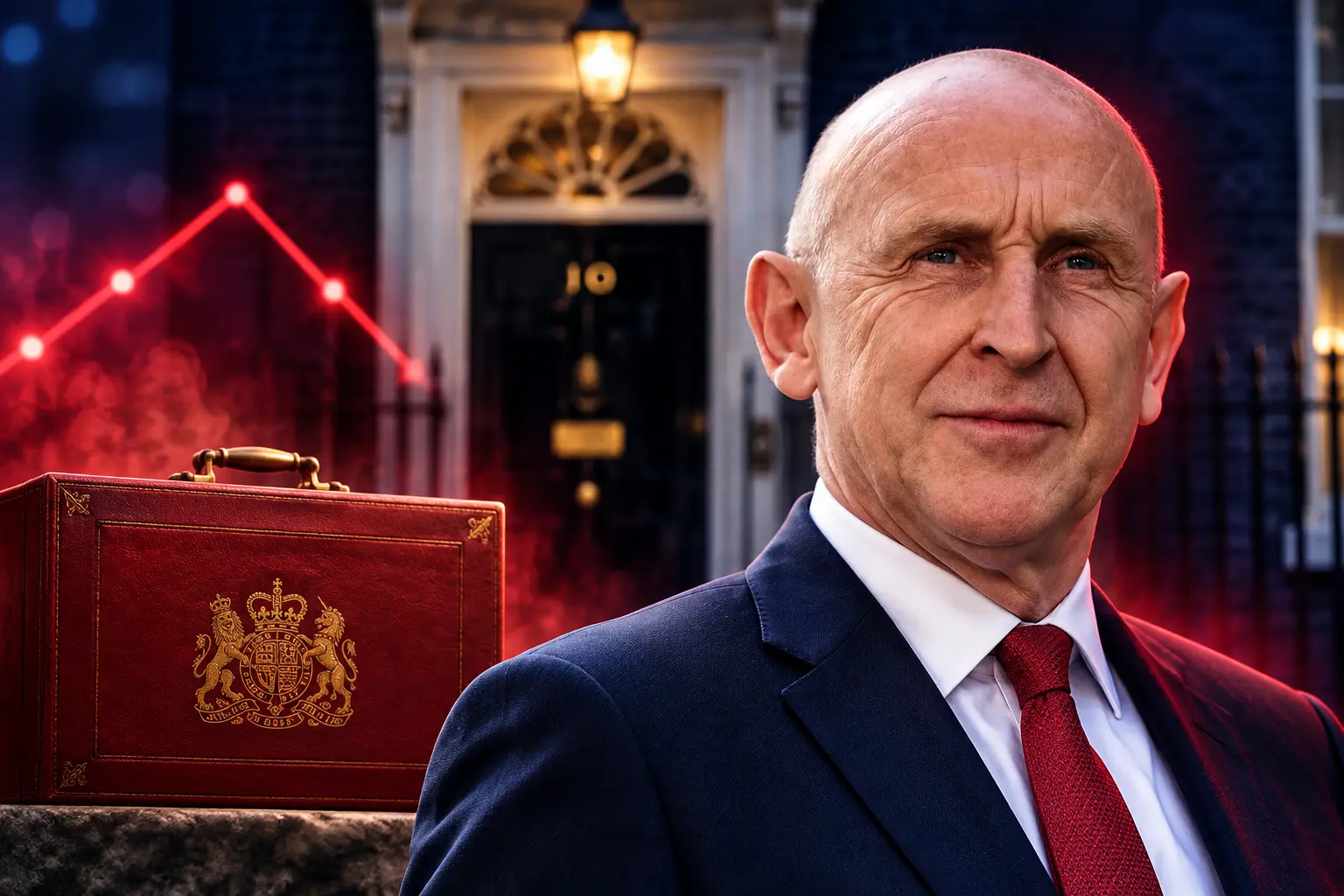
The IMF Tells Healey to Stay the Course
Chief economist Silvana Tenreyro, speaking at the Bangkok launch, put the UK with India as the country that “stands out” because it has already started to bring borrowing down. Asked whether Britain was on the list of states told to cut deficits, she said it should “stay the course”.
As you know, the UK has already started the consolidation process and it is the country that basically stands out, along with India
Silvana Tenreyro, IMF chief economist, World Economic Outlook launch, Bangkok
The Fund projects that the UK will cut annual borrowing by nearly four percentage points of GDP from 2025 to 2031, more than the rest of the G7, several of which are raising their deficits over that span. Britain is also seen with the lowest annual borrowing in the group in 2031, and with the longest average debt maturity, which locks in rates for longer.
Simon French, chief economist at Panmure Liberum, wrote that “the UK has the most aggressive deficit reduction plan of any G7 economy”. The stay-the-course line is also a warning about cuts that are pencilled in but not fully allocated at the end of the parliament, when defence and public-sector pay collide at the 2027 spending review. Hope that the Gulf calms, or that global credit markets ease, is not a plan.
Andy Burnham’s government is still new. Healey is finishing tax and spending numbers the gilt market will read as a test of whether that deficit path is real.
Why Energy Bills Hit After Wholesale Prices
The war that started on 28 February closed parts of the Strait of Hormuz and, later, the Bab al-Mandeb. Brent crude has gone from around $60 a barrel at the turn of the year to about $100. UK wholesale gas more than doubled, from roughly 70p to around 185p per therm, according to the Institute for Fiscal Studies Green Budget chapter with Barclays, published on 12 October.
Ofgem resets the default tariff cap every quarter, so the wholesale jump does not land on standard-variable bills at once. The cap that took effect on 1 October rose 4%, or £60, to £1,723 ($2,348) a year for a typical dual-fuel household paying by direct debit. A government cut in VAT on electricity from 5% to 0% offset part of the power-side rise. Heating oil, which sits outside the cap, almost doubled in a month after the conflict began.
THE DELAYED BILL PATH
- Oil: Around $60 a barrel at the start of 2026, about $100 now.
- Wholesale gas: From about 70p per therm to about 185p, more than double.
- October cap: £1,723 a year for a typical dual-fuel direct-debit household, up £60.
- January 2027: IFS market pricing implies about a 20% rise in the cap; the Commons Library says gas unit prices to rise 22 percent and electricity units 15%.
That January reset is why the Fund’s 2027 slowdown is not a distant risk. The Resolution Foundation puts typical bills around £2,000 from January, close to the peak after Russia’s full-scale invasion of Ukraine. The Bank of England has already tied an inflation peak above 4% in early 2027 in part to that cap.
Long Gilt Yields Near a 28-Year High
Long-term UK borrowing costs hit their highest since 1998 last week. The IFS gilt chapter records 30-year gilt yields at 5.9 percent on 2 October, up from about 5.2% on the eve of the spring forecast. Ten-year yields rose from 4.4% to 5.4% over the same stretch.
GILT YIELDS SINCE THE SPRING FORECAST
| Bond | Spring forecast | 2 October 2026 |
|---|---|---|
| 10-year gilt | 4.4% | 5.4% |
| 30-year gilt | 5.2% | 5.9% |
UK government debt is around 90% of national income. The share of national income needed to service it, nearly 4%, is twice the rate in the decade before Covid. The Office for Budget Responsibility’s March forecast already had the debt-interest bill reaching £137 billion in 2030-31. The Green Budget puts remaining room against the fiscal rules at around £20 billion, against £24 billion in that March forecast, after higher debt interest and extra welfare costs are partly offset by fatter tax receipts.
The rise is global, tied to energy inflation and the turn in policy rates, and gilts have not sold off more than other major markets over the past year. That is cold comfort if Healey looks as if he is loosening. On 20 July, Burnham’s remarks on “fiscal flexibility” lifted 30-year yields 10 basis points to 5.75% on a day when other long bonds moved 1 to 3 basis points. Bank Rate is 3.75%. The Bank has not raised it since the war began. The IFS expects two quarter-point moves, to 4.25% by February; market prices imply something closer to 4.75%.
Winter Bills Arrive Before the Growth Dividend
A 1.3% expansion does not show up in a kitchen as extra cash. IFS authors Jack Meaning and Cian Hennigan say real earnings fall in both 2026 and 2027, and that by the end of 2027 real GDP is about 0.8% lower than it would have been without the conflict. August CPI was 3.1%; strip out household energy and petrol and it would have been 2.3%. Inflation has now been above the 2% target for five years.
THE SQUEEZE THE UPGRADE DOES NOT CANCEL
- Prices: IMF inflation 3.3% in 2026 and 2.8% in 2027, with a Bank peak above 4% in early 2027.
- Jobs: Unemployment averaging 5.3% this year and next, from 4.9% in the three months to end-July.
- Incomes: A typical working-age household is £2,900 worse off this year than in a world of 2% inflation over five years, the Resolution Foundation finds.
- Rates: Bank Rate 3.75%, with markets priced for further rises as long yields stay high.
Andrew Griffith, the Conservative shadow chancellor, said that if Healey “reaches for more tax rises” he is “choosing slower growth and working people will pay for it”. The Fund’s own wording is cooler: extra spending to support households or firms “should be used sparingly” and should not “complicate the task of monetary policy”.
Targeted Support Fits the Fund’s Own Playbook
Chapter 2 of the Outlook, on cost-of-living crises, says governments should keep price signals and lean on temporary, targeted income support for the most exposed. Measures that suppress prices can take 3 to 22 times more fiscal resources and can fail when many countries try them at once. That is the box Healey is in if he wants “breathing space” without looking as if he has broken the deficit path Tenreyro just praised.
The Resolution Foundation’s Budget briefing, Hitting the Buffers, asks him to pair deficit repair with help for families who cannot heat their homes. It sketches a temporary scheme for households with income below £24,000 that would save eligible homes £175 on average and cost £2 billion. It also wants the link restored between local rents and housing support, which it says would help more than 900,000 households at a cost of £2.3 billion after rents rose more than 20%, about £160 a month on a modest two-bedroom home.
WHAT TARGETED HELP WOULD COST
- Energy scheme: Income below £24,000, about £175 off bills, £2 billion in total.
- Rent support: Restore the local-rent link for more than 900,000 households, £2.3 billion.
- IMF test: Temporary, targeted transfers, not a new blanket price freeze.
Healey has already said the government would look to “provide some breathing space” for households in the Budget, after two earlier fiscal events added £66 billion in taxes. The cheap version of that phrase is a winter rebate aimed at poorer homes. The expensive version is a cap freeze the Fund has just costed as a fiscal luxury.
Conflict in the Middle East and Europe is hitting people in the UK and around the world. But Britain’s economy is showing strong international resilience in the face of these challenges: we’re forecast to be the joint second fastest-growing G7 nation in 2026 and have the lowest deficit in the G7 by 2031.
John Healey, Chancellor of the Exchequer
What the October 28 Budget Can Still Do
Healey is due at the IMF and World Bank meetings in Bangkok this week, then at the dispatch box on 28 October. The Fund’s 1.3% figure will be in every briefing note. So will stay the course. The live choices sit in a short list of dates.
THE PATH TO THE BUDGET
- 28 February 2026: US-Iran fighting begins and energy prices jump.
- 16 July 2026: IMF Article IV already urges a tightly targeted, temporary, budget-neutral energy response and staying the course on deficit cuts.
- 1 October 2026: Ofgem cap rises 4% to £1,723 for a typical dual-fuel household.
- 12 October 2026: IFS Green Budget sets out the 20% January cap risk and gilt yields at 5.9% on the 30-year.
- 13 October 2026: IMF lifts 2026 growth to 1.3% and cuts 2027 to 1.2%.
- 28 October 2026: Healey presents the Budget.
- 25 November 2026: Ofgem is due to confirm the January 2027 cap.
A Budget that restates the deficit path, funds a small targeted winter scheme, and leaves the January cap to Ofgem would match what the Fund just wrote. A Budget that spends the 1.3% upgrade as if it were cash in the bank would collide with 5.9% long yields and with a 2027 growth rate the same report has already trimmed to 1.2%.
The upgrade is real. The room it appears to create is not. Healey has a fortnight to show the gilt market he heard Tenreyro, and to show households that 1.3% is not the same thing as a cheaper winter.
Disclaimer: This article is news reporting and analysis of IMF forecasts, official UK energy-price data and fiscal research. It is for information only and is not investment, tax, benefits or financial advice, and it is not a recommendation to buy or sell gilts, other bonds or any other asset. Readers who are making Budget, borrowing, energy-tariff or portfolio decisions should speak to a qualified independent financial adviser, tax adviser or debt adviser who can look at their own circumstances. Figures and policy statuses are those published by the named bodies on the dates given and will change with later forecasts, gilt moves and Ofgem cap decisions.

John Mayer Bets Sob Rock Can Be a Record Label

H1N1 Rises Early After Last Winter’s H3N2 Wave

Human Fires Drive Amazon Carbon Emissions Even Without Drought

Charli XCX Secretly Films a Cameo in Scorsese’s Horror

Santos’s 58-Yard Kick Decides the Williams-Maye Rematch

Generation Lab’s Secret Youth Shot Has a Copycat Problem

Tesla Raises Dual Motor Prices as Texas Builds Cybercabs

The Nantucket Friendship Basket Boom Meets a Maker Shortage

Bristol Myers Quits Cellares as Autoimmune Doses Proceed

Okta Stock Jumps 20% on McKinnon’s Identity Bet
-
 NEWS2 months ago
Generation Lab’s Secret Youth Shot Has a Copycat Problem
-
 AUTO2 months ago
Tesla Raises Dual Motor Prices as Texas Builds Cybercabs
-
 LIFESTYLE2 months ago
The Nantucket Friendship Basket Boom Meets a Maker Shortage
-
 NEWS2 months ago
Okta Stock Jumps 20% on McKinnon’s Identity Bet
-
 BUSINESS2 months ago
Bristol Myers Quits Cellares as Autoimmune Doses Proceed
-

 BUSINESS2 months ago
Poland Closes Visa-Free Work for Three Fast-Growing Nationalities
-

 LIFESTYLE2 months ago
Labor Day Mattress Sales Repeat a Familiar Holiday Discount
-

 NEWS2 months ago
Ox Alpha Was a Chinese Chip Stress Test All Along