
BUSINESS
Abbott Formula Deal Sends $69 Million to Insiders
Abbott will pay $384,999,040 over WIC formula claims. Three former employees take $69 million.

Abbott Laboratories will pay $384,999,040 to settle U.S. claims that it sold noncompliant infant formula to federal nutrition programs.
The Sept. 14 deal closes a False Claims Act case over powder made at Sturgis, Michigan, and Casa Grande, Arizona, from Jan. 1, 2018, through Dec. 31, 2022. Three former employees will receive $69 million of the federal recovery. Abbott admits no fault, and the Justice Department already shut the criminal file in June.
A $69 Million Cut for Three Former Employees
The Justice Department said Abbott has agreed to pay $384,999,040 to resolve allegations that it caused false claims to be submitted to federal and state programs. Of that sum, $348,700,868 goes to the United States and $36,298,172 goes to states for Medicaid and WIC claims. The $69 million for the relators is taken from the federal recovery, not added on top of it.
The payees are Scott Millard, Kristine Cooper, and Loren Cooper, who worked in Abbott’s quality and maintenance operations. Their lawyers at Stein Mitchell Beato & Missner LLP filed the qui tam case in 2022 in the U.S. District Court for the Western District of Michigan, captioned United States, et al., ex rel. Scott Millard, et al., v. Abbott Laboratories, No. 1:22-cv-994. The United States filed its complaint in intervention on Nov. 13, 2025. Six states later joined in part.
THE PAYOUT SPLIT
| Payee | Amount | Role in the deal |
|---|---|---|
| United States | $348,700,868 | False Claims Act recovery |
| Three former employees | $69,000,000 | Relator share, paid from the federal sum |
| Participating states | $36,298,172 | Medicaid and WIC claims |
| Total paid by Abbott | $384,999,040 | Civil resolution, no finding of liability |
After the federal share is cut, the Treasury nets $279,700,868. The three relators, together, take more than the entire state pot. Successful False Claims Act relators typically receive 15 percent to 30 percent of a federal recovery. Congress built that cut so insiders would bring hidden billing problems to the government.
Insiders see problems that government payors cannot see from a claim form.
Melissa S. Fox, partner, Stein Mitchell Beato & Missner LLP
Andrew M. Beato, who chairs the firm’s False Claims Act practice, said his clients came forward because they believed families deserved the truth. The civil case treated the injury as a billing injury: the government paid for powder that, the complaint said, did not meet the rules Abbott certified in its bids and contracts.
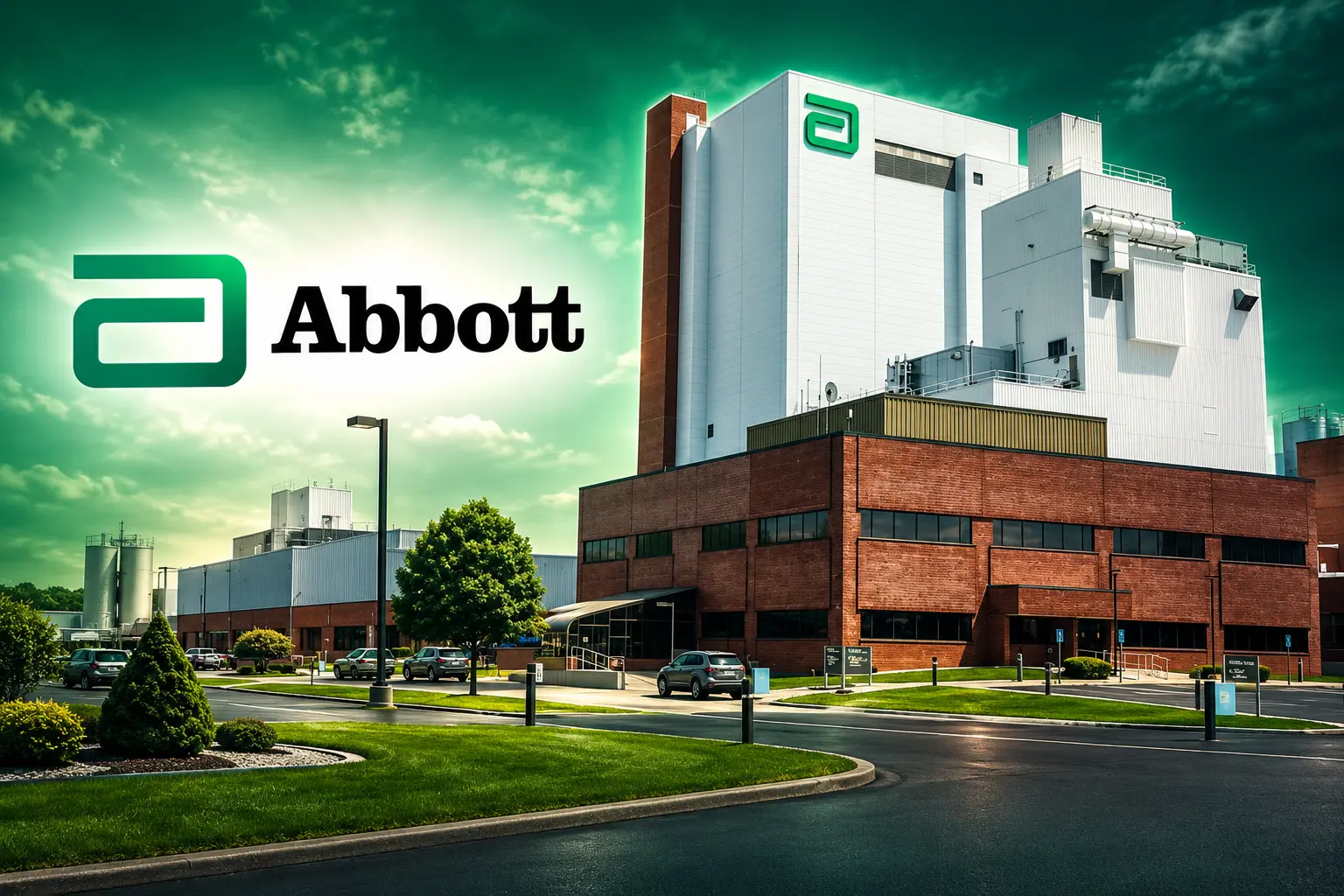
More Than Half of U.S. Formula Runs Through WIC
The Justice Department said more than half of all infant formula purchased in the United States is paid for with USDA funds through WIC, the Special Supplemental Nutrition Program for Women, Infants, and Children. State Medicaid programs also buy certain formula. That is why a food-safety fight at a Michigan plant became a False Claims Act case rather than a payout to the families in the 2022 illness file.
Parents of the four infants CDC listed in its investigation are not named as payees. The instrument pays the programs that bought the cans. Acting Deputy Attorney General Trent McCotter still framed the check as a win for families.
Today’s settlement is a victory for American families and makes clear the safety of our children is not negotiable.
Trent McCotter, acting deputy attorney general, Justice Department announcement, Sept. 14, 2026
Associate Attorney General Stanley E. Woodward Jr. said no company should gamble on infants by allowing unsanitary conditions to persist at a baby-formula plant. U.S. Attorney Timothy VerHey for the Western District of Michigan said the deal holds a manufacturer to account when the United States pays for noncompliant product. USDA Inspector General John Walk said parents rely on companies like Abbott to follow the rules.
State cuts started landing after the federal announcement. Michigan Attorney General Dana Nessel said on Sept. 16 that Michigan will receive $469,890. New York Attorney General Letitia James said on Sept. 17 that New York will receive more than $9.3 million, of which $5.3 million goes directly to the state. Massachusetts Attorney General Andrea Joy Campbell said her state will receive $1.9 million. Maryland Attorney General Anthony G. Brown said Maryland will recover more than $3 million.
Sturgis sits in Michigan. The plant’s home state is in line for less than half a million dollars. The three former workers split $69 million. That gap is the design of qui tam law, which rewards the people who opened the file, not the county that hosted the factory.
Roof-Leak Umbrellas Over the Spray Dryers
The complaint in intervention described conditions at Sturgis that, the government said, put powder at “unacceptable risk of microorganism contamination” and hurt reliability, quality, and safety. Casa Grande, Arizona, is in the covered period as well. The products at issue include powdered infant formula and nutritional therapy goods sold into the same public programs, among them Similac, Alimentum, and EleCare.
Roof leaks were common in the Sturgis plant, the department said, with water running and dripping over equipment. Abbott used temporary fixes, including roof leak umbrellas, to divert water in processing areas even though, the complaint said, corporate leadership understood that a wet plant raised the risk of germs in the powder.
THE STURGIS ALLEGATIONS
- Roof water: Leaks were treated with umbrellas and other stopgaps instead of a lasting repair, the complaint said, leaving product areas wet.
- Spray dryers: Abbott kept running dryers after documenting cracks and pits, which the government said raised the risk of micro contamination when moisture was present.
- Cleaning cycles: The company lengthened the number of batches that passed through the dryers between cleanings so it could raise output, the department alleged.
- Testing and FDA: Abbott intentionally did not test for bacterial growth so it would not obtain positive results, the government said, and in some cases did not disclose contamination results in 2019 and 2022 FDA inspections.
Those are allegations. The Justice Department’s own release ends with a line that the claims resolved by the settlement are allegations only and there has been no determination of liability. Abbott, in its Sept. 14 statement, said the agreement does not represent any finding of fault or liability.
Genetic Tests Left the Plant Unlinked to the Cases
CDC recorded four Cronobacter infections and two deaths in infants who had consumed formula produced at Sturgis. The infants lived in Minnesota, Ohio, and Texas. Cronobacter infections may have contributed to the deaths of two infants in Ohio, CDC said. Formula types in those files included Similac Sensitive, Similac Pro-Total Comfort, Similac Advance, and Similac PM 60/40.
THE CDC CASE COUNT
- Confirmed cases: Four infants, all of whom had consumed Sturgis formula before they got sick.
- Deaths: Two, both in Ohio, with CDC stating the infections may have contributed.
- Genetics: Whole genome sequencing on the two available patient samples did not find them closely related to plant strains, or to each other.
- Status: CDC closed the investigation and identified no additional cases in that file.
The unmatched genomes are the scientific fact Abbott keeps putting at the front of its defense. The company said no unopened, distributed Abbott infant formula has ever tested positive for Cronobacter sakazakii. It said FDA testing in early March 2022 of unopened product from the homes of the infants under investigation also came back negative. Samples from lots that matched what the infants consumed, Abbott said, tested negative as well.
Abbott’s account of opened cans is narrower. In all five cases it describes, unopened containers tested negative. Open containers were tested in four of the five; three of those four were negative. The one positive open can, Abbott said, carried two strains of Cronobacter sakazakii, neither found in the Sturgis plant. One matched the infant’s infection. The other matched a strain on a bottle of distilled water in the home used to mix the formula. In March 2023, Abbott added, a CDC report found Cronobacter sakazakii on breast pump parts in the home of one of the four infants.
Abbott also points to a National Academies presentation by CDC scientist Dr. Julia Haston, which the company says described no definitive link between Sturgis and the cases, said the cases did not meet the definition of an outbreak, and said one of the four was linked to powder likely contaminated in the home after the can was opened. CDC’s own outbreak page does not use the phrase “no definitive link.” It reports the unmatched sequences and the two deaths, and it leaves the investigation closed.
The FDA’s February 2022 powdered formula investigation is the consumer record of the recall. Abbott recalled Similac, Alimentum, and EleCare powdered formula from Sturgis on Feb. 17, 2022, then added one lot of Similac PM 60/40 on Feb. 28 after a death associated with that lot. The shutdown of Sturgis, Abbott’s largest U.S. formula factory, emptied shelves and pushed Washington to ease imports. That shortage is the public memory of 2022. The Sept. 14 check is not compensation for empty shelves. It is a repayment theory for WIC and Medicaid invoices.
Why No One Was Charged After the Sturgis Recall
Abbott said the government has closed its criminal investigation on the matter. A Justice Department spokeswoman, speaking in late June 2026 when that closure became public, said ensuring the safety of the nation’s food supply is a top priority, but that this Department of Justice does not believe in regulation by prosecution. Career prosecutors had spent years on the file. The civil case is what remained.
Senator Adam Schiff of California sent a letter in July 2026 asking who inside the department closed the criminal case and whether senior officials overruled a recommendation to charge. He cited reports that prosecutors had weighed a Food, Drug, and Cosmetic Act count and a separate count for misleading the government, and that at least one individual had been under review. No charges were filed. Schiff’s questions are the last public word on a prosecution that never happened.
The civil settlement does the work the criminal case will not. It claws back money from sales into WIC and Medicaid. It does not produce a verdict on why two infants in Ohio died. It does not put a name on an indictment.
FROM THE 2022 RECALL TO THE 2026 CHECK
- January 1, 2018: Start of the period covered by the civil settlement for powder from Sturgis and Casa Grande.
- February 17, 2022: Abbott recalls Similac, Alimentum, and EleCare powder from Sturgis and stops production there.
- February 28, 2022: Abbott adds one lot of Similac PM 60/40 after a death tied to that lot.
- May 16, 2022: A federal court in the Western District of Michigan enters a consent decree of permanent injunction with Abbott and three plant officials, setting the terms for a restart.
- 2022: Millard and the Coopers file the sealed qui tam complaint that becomes case 1:22-cv-994.
- November 13, 2025: The United States files its complaint in intervention.
- June 2026: The Justice Department closes the criminal investigation and points to the civil track.
- September 14, 2026: Abbott agrees to pay $384,999,040, with $69 million of the federal sum going to the three relators.
The May 2022 consent decree is still the FDA’s tool at Sturgis. The September payment closes the billing case. It does not reopen the criminal file.
Abbott’s $670 Million NEC Truce Came in August
The WIC settlement is not Abbott’s only large formula check of the season. On Aug. 20, 2026, Abbott said it had reached agreements covering about 2,000 other individuals plus the Gill case, for an aggregate of about $670 million, over specialty formulas for preterm infants and necrotizing enterocolitis, a bowel disease. A St. Louis jury had awarded $495 million in Gill in July 2024. Abbott said it chose the package rather than pay about $600 million on that judgment plus interest, and it admitted no liability.
That docket is a different theory from Cronobacter at Sturgis. It concerns cow’s-milk formulas used in neonatal units and a claimed failure to warn, not WIC invoices for powder from a wet plant. After Aug. 20, Abbott said roughly 1,700 lawsuits remained, with claims on behalf of about 12,700 infants, a count it said includes duplicates, infants who had NEC before any formula, and filings that name both Abbott and Mead Johnson without saying whose product was used.
Stack the two civil bills and Abbott has committed more than $1 billion this summer on infant-formula litigation, still without a finding of fault in either deal. The September check is the one that pays three former employees. The August check is the one that pays a slice of the NEC docket. Neither check is a verdict on the four CDC cases from 2022.
Frequently Asked Questions
How much of the Abbott settlement do the whistleblowers receive?
Scott Millard, Kristine Cooper, and Loren Cooper receive $69 million as their share of the federal recovery in case No. 1:22-cv-994 in the Western District of Michigan. That sum is paid from the $348,700,868 federal amount, and False Claims Act relators typically receive 15 percent to 30 percent of a federal recovery. The settlement papers also set interest at 4.375 percent a year on the federal sum from April 13, 2026, until payment.
Did unopened Similac cans test positive for Cronobacter?
Abbott says no unopened, distributed can has ever tested positive, and it says FDA tests in March 2022 of unopened product from the homes of the infants then under investigation were negative. The company’s account of the one positive open can is that it held two strains, one matching the infant and one matching distilled water in the home, and that a March 2023 CDC report later found Cronobacter sakazakii on breast pump parts in one of those homes. CDC’s published genetics on the two available clinical samples did not match the strains found in the plant.
What is the False Claims Act in the Abbott formula case?
The False Claims Act lets a private person, called a relator, sue in the government’s name over bills paid with federal money, and then share in any recovery. Stein Mitchell said settlements and judgments under the law have exceeded $85 billion since Congress strengthened it in 1986. In this file the alleged false claims are WIC and Medicaid payments for powder Abbott certified as meeting federal manufacturing rules.
Which Abbott formula products were recalled in 2022?
On Feb. 17, 2022, Abbott recalled Similac, Alimentum, and EleCare powdered formula from Sturgis when the first two digits of the lot code were 22 through 37, the code contained K8, SH, or Z2, and the use-by date was April 1, 2022, or later. On Feb. 28 it added Similac PM 60/40 lot 27032K80 on the can, 27032K800 on the case, after a death associated with that lot. CDC’s four cases involved Similac Sensitive, Similac Pro-Total Comfort, Similac Advance, and Similac PM 60/40.
Was Abbott criminally charged over the Sturgis plant?
No. The Justice Department closed the criminal investigation in June 2026 without charges, and $174,350,434 of the federal civil sum is labeled restitution in the settlement agreement. A May 16, 2022, consent decree of permanent injunction remains the FDA path for the Michigan plant, naming Abbott and three Sturgis officials as defendants in that earlier case. The Sept. 14 payment resolves the civil billing claims only.
Senator Adam Schiff asked in July who inside the Justice Department closed the criminal file. That letter is still the last public word on charges that were never filed.
Disclaimer: This article is news reporting on a completed civil settlement and related public-health records. It is for information only and is not legal advice, medical advice, or investment advice. It does not tell parents how to feed an infant, how to join or opt out of any lawsuit, or whether to buy, hold, or sell Abbott securities. Readers with a legal question should consult a licensed attorney; readers with a feeding or medical question should consult a pediatrician or other qualified clinician; readers with an investment question should consult a registered financial adviser. The dollar figures, case status, and scientific findings reflect the Justice Department, Abbott, CDC, FDA, and company filings cited here as of the dates on those documents and may change if a court, agency, or party issues a later order or statement.

John Mayer Bets Sob Rock Can Be a Record Label

H1N1 Rises Early After Last Winter’s H3N2 Wave

Human Fires Drive Amazon Carbon Emissions Even Without Drought

Charli XCX Secretly Films a Cameo in Scorsese’s Horror

Santos’s 58-Yard Kick Decides the Williams-Maye Rematch

Tesla Raises Dual Motor Prices as Texas Builds Cybercabs

Generation Lab’s Secret Youth Shot Has a Copycat Problem

The Nantucket Friendship Basket Boom Meets a Maker Shortage

Bristol Myers Quits Cellares as Autoimmune Doses Proceed

Okta Stock Jumps 20% on McKinnon’s Identity Bet
-
 NEWS2 months ago
Generation Lab’s Secret Youth Shot Has a Copycat Problem
-
 AUTO2 months ago
Tesla Raises Dual Motor Prices as Texas Builds Cybercabs
-
 LIFESTYLE2 months ago
The Nantucket Friendship Basket Boom Meets a Maker Shortage
-
 BUSINESS2 months ago
Bristol Myers Quits Cellares as Autoimmune Doses Proceed
-
 NEWS2 months ago
Okta Stock Jumps 20% on McKinnon’s Identity Bet
-

 BUSINESS2 months ago
Poland Closes Visa-Free Work for Three Fast-Growing Nationalities
-
 LIFESTYLE2 months ago
Labor Day Mattress Sales Repeat a Familiar Holiday Discount
-

 NEWS2 months ago
Ox Alpha Was a Chinese Chip Stress Test All Along