
NEWS
India Finishes Fourth Again, 21 Medals Short of Hangzhou
India held fourth at Nagoya with 85 medals, 21 short of Hangzhou, after archery, boxing and team golds rebuilt the list.

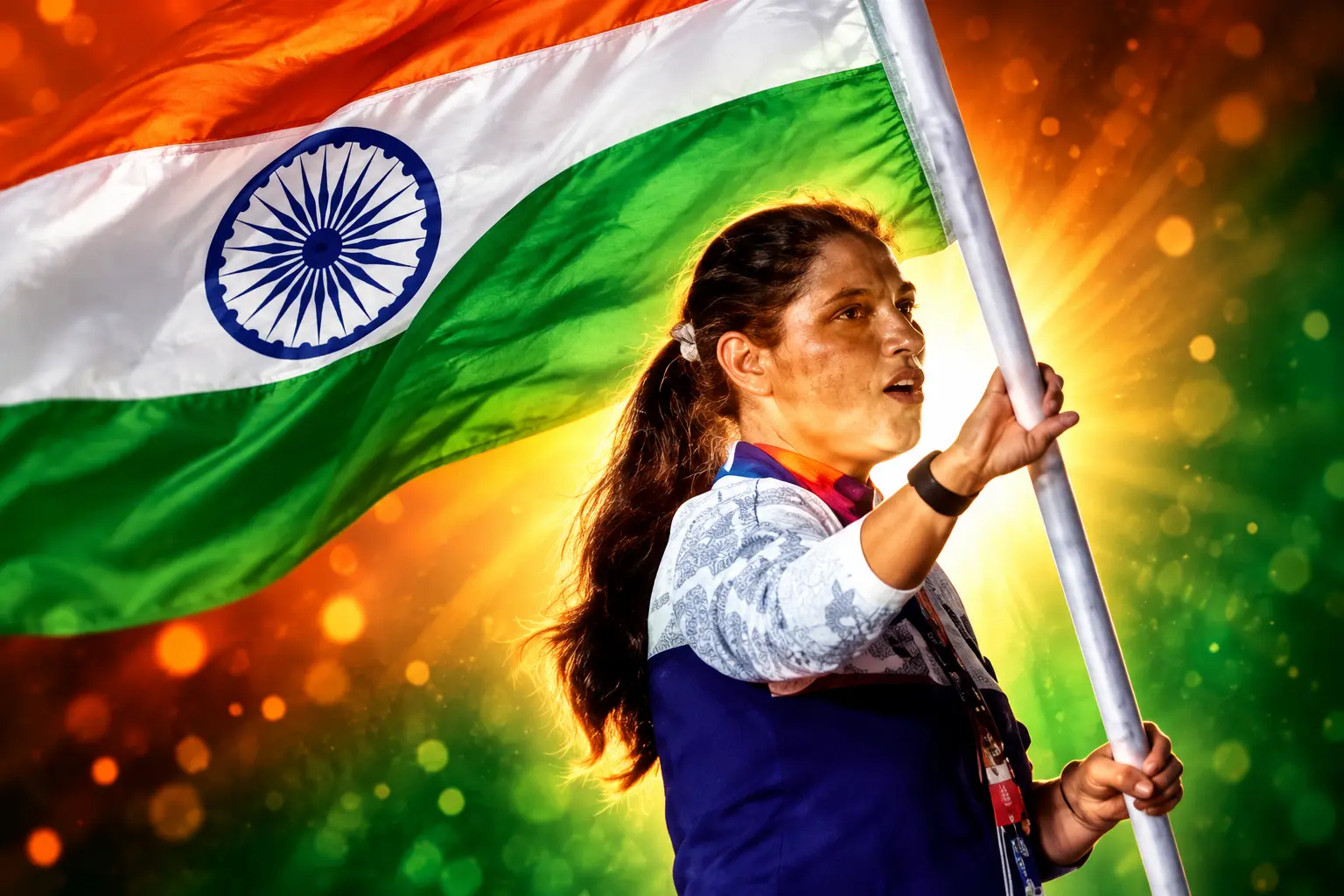
India finished fourth at the Asian Games in Nagoya with 85 medals, 21 fewer than its Hangzhou haul, as the 20th Games closed on 4 October. The split was 21 gold, 27 silver and 37 bronze. Trap shooter Neeru Dhanda, with two golds and a silver, carried the Indian flag at Mizuho Park Athletic Stadium.
Fourth place matched the previous Games. The gold list did not. Hangzhou produced 28 golds and 106 medals; Nagoya produced a repeat rank on a thinner pile, after shooting and athletics gave back the titles that had built that peak.
The Hangzhou Peak That Did Not Repeat
The 20th Asian Games in Aichi-Nagoya ran from 19 September to 4 October across 43 disciplines, with 45 national Olympic committees in the field. India sent 495 athletes in 36 disciplines and left with its second-best medal total, still 21 medals short of Hangzhou’s 106.
Hangzhou had been the first time India reached fourth, on 28 golds, 38 silvers and 40 bronzes, with 661 athletes. Jakarta 2018, the step before that jump, ended eighth on 16 golds and 70 medals. Nagoya held the new rank and gave back a slice of the haul.
INDIA AT THE LAST THREE ASIAN GAMES
| Games | Rank | Gold | Total | Athletes |
|---|---|---|---|---|
| Jakarta 2018 | 8 | 16 | 70 | 570 |
| Hangzhou 2022 | 4 | 28 | 106 | 661 |
| Aichi-Nagoya 2026 | 4 | 21 | 85 | 495 |
Before Hangzhou, India had not finished as high as fourth since the early decades of the Games, when New Delhi 1951 brought second place and Jakarta 1962 brought third. Two straight fourths now look like a floor. The medal count is still moving underneath it.
Why India Won 21 Fewer Medals Than Hangzhou
The squad was 166 athletes smaller than Hangzhou, a 25.1% cut, and the golds fell by the same share: seven fewer, 25%. Total medals fell 19.8%. Stripped to a rate, Nagoya returned 17.2 medals per 100 athletes against 16.0 in Hangzhou, so the smaller group was a touch more productive. It was not more golden.
Only eight of Hangzhou’s 28 golds were kept. Twenty titles changed hands. Shooting, which had delivered seven golds and 22 medals in China, came back with three golds and 15 medals. Athletics, six golds and 29 medals last time, managed one gold, nine silvers and 14 bronzes for 24 medals. Volume stayed. The top step did not.
India also spent the opening stretch well outside the top four. By 28 September it had four golds. The climb to fourth was a late product of cricket, hockey, kabaddi, boxing and archery, not a copy of the Hangzhou shooting-and-track engine. A trimmed list of events will do that: lose the sports that printed gold in bulk, and fourth place has to be rebuilt in the last few days.
That is the hangover the rank conceals. Keep fourth, cut the squad, and the per-athlete yield can tick up while the gold column still slides. The next Olympic cycle will test whether boxing and archery can keep paying, or whether shooting and the track have to climb back before Doha.
Five Archery Golds and a Boxing Surge
Nine sports supplied the 21 golds. Archery again led the gold column with five, matching its Hangzhou title count, including the women’s compound team of Jyothi Surekha Vennam, Prithika Pradeep and Chikitha Taniparthi, the mixed and men’s compound teams built around Sahil Jadhav, and Kumkum Mohod in women’s recurve, individually and in the women’s recurve team.
Boxing, which took no gold in Hangzhou, won three: Lovlina Borgohain at 75kg, Parveen Hooda at 65kg, and Ankush Panghal at 80kg. Wrestling added two through Sujeet Kalkal at 65kg and Aman Sehrawat at 57kg after a blank gold column last time. The old team sports did what they do. Cricket, hockey and kabaddi each swept both the men’s and women’s titles, six golds with no silver or bronze mixed in.
WHERE INDIA’S 21 GOLDS CAME FROM
- Archery: Five golds and nine medals, the only sport to match its Hangzhou title count.
- Shooting: Three golds and 15 medals, four golds and seven medals fewer than Hangzhou.
- Boxing: Three golds and six medals after a Hangzhou campaign with no gold.
- Team doubles: Cricket, hockey and kabaddi took both men’s and women’s titles, six golds.
- Wrestling: Two golds through Kalkal and Sehrawat after none in Hangzhou.
- Athletics: One gold, the women’s 4x400m of Kiran Pahal, Poovamma Machettira, Prachi Choudhary and Vithya Ramraj, from 24 medals.
- Golf: Pranavi Urs won the women’s individual, with the women’s team taking silver.
Athletics was still India’s largest medal sport, just not a gold sport. Twenty-four podiums and a single title is a factory stuck on the lower steps. Shooting stayed busy too, with eight silvers, and still lost the gold share that had defined Hangzhou. The new mix is combat sports plus the team doubles plus archery, with the gun range and the track no longer printing the same way.
Neeru Dhanda Took the Flag After a Trap Record
Dhanda, 26, was the closer India sent out because she had already rewritten the shotgun column. On 29 September at the Aichi Prefectural General Shooting Gallery she hit 28 of 30 targets in the final, two clear of China’s Sun Yunong on 26, and lifted the Asian record from 24. She is the first Indian woman to win an Asian Games gold in any shotgun event, and India’s first individual medallist in women’s trap, which has been on the programme since Beijing 1990.
She had already helped Aashima Ahlawat and Manisha Keer to team silver on 328, behind China’s 346. The next day she partnered Kynan Chenai to mixed trap gold on an Asian-record 34, India’s first medal in an event that debuted at Jakarta 2018, vanished from Hangzhou, and returned in Nagoya. Two titles at one Games is a first for an Indian shotgun shooter. Suruchi Singh and Kamaljeet took the other shooting gold in the 10m air pistol mixed team.
That is why she had the flag. The campaign’s most visible new champion came from a sport that still finished well below its Hangzhou gold count, which is the whole Nagoya pattern in one person: a record on the clay, and a column that no longer dominates the table.
China’s 169 Golds, Japan’s Home Record
India’s fourth sits in a table that still has a three-country ceiling. China put up 169 golds and 341 medals, its 12th straight lead on the gold table and its best haul at an overseas Asian Games. Host Japan set a national record with 83 golds and 269 medals, its third home Asian Games after Tokyo 1958 and Hiroshima 1994. South Korea took third with 39 golds and 150 medals.
Uzbekistan also won 21 golds. India stayed ahead on 27 silvers to 25 and finished fourth; Uzbekistan took fifth with 70 medals. Kazakhstan, with 84 medals, sat eighth because it had only 12 golds. The ranking is golds first, and that is why India’s 85 medals still trailed Korea by 18 golds and Japan by 62.
FINAL MEDAL TABLE, TOP EIGHT
| Rank | NOC | Gold | Silver | Bronze | Total |
|---|---|---|---|---|---|
| 1 | China | 169 | 89 | 83 | 341 |
| 2 | Japan | 83 | 95 | 91 | 269 |
| 3 | South Korea | 39 | 43 | 68 | 150 |
| 4 | India | 21 | 27 | 37 | 85 |
| 5 | Uzbekistan | 21 | 25 | 24 | 70 |
| 6 | Iran | 19 | 18 | 15 | 52 |
| 7 | Thailand | 18 | 13 | 21 | 52 |
| 8 | Kazakhstan | 12 | 24 | 48 | 84 |
The gap to third is the live problem. Eighteen golds is not a late-Games sprint. It is a programme gap in the sports China and Korea still own, swimming among them, and it is why fourth can become a habit without becoming a step into the top three.
The Flag Goes to Doha for 2030
Sheikh Joaan bin Hamad Al Thani, president of the Olympic Council of Asia, closed the Games under the slogan Imagine One Asia, with Crown Prince Akishino and Crown Princess Akishino in the stadium. The OCA flag, and the torch and flag from the first Asian Games in New Delhi in 1951, passed to Qatar, whose capital will host in 2030. High jumper Mutaz Barshim took part in the handover.
You raised the bar for Asian sport.
Sheikh Joaan bin Hamad Al Thani, President, Olympic Council of Asia, Nagoya closing ceremony
Joaan told the athletes they had left a trail of world, Asian and Asian Games records, and he called the youth of Asia to assemble in Doha in four years. The line You raised the bar for Asian sport sat on a night that also launched Doha’s next-host show, complete with a horse-and-rider turn on the infield.
Prime Minister Narendra Modi posted that evening with determination, passion and remarkable sporting spirit as the praise for the whole squad, then congratulated the medal winners and said he wanted the Games to feed grassroots sport.
As the Asian Games 2026 draw to a close, my compliments to every member of the Indian contingent for representing our nation with determination, passion and remarkable sporting spirit.
Congratulations to all our medal winners, whose performances have brought immense joy to the… pic.twitter.com/8VC4I4Iaud
— Narendra Modi (@narendramodi) October 4, 2026
On 5 October the men’s hockey team, which had retained its Asian Games title, received a public welcome in Delhi. That is the shape of this campaign in one arrival: a defended team gold, a fourth-place flag, and a medal pile that still has to grow if the Hangzhou peak is going to be a floor rather than a one-Games spike.
Frequently Asked Questions
How Is the Asian Games Medal Table Ranked When Golds Are Tied?
Golds are counted first, then silvers, then bronzes, the same order the IOC uses. Uzbekistan also won 21 golds in Nagoya, so India’s 27 silvers against Uzbekistan’s 25 decided fourth and fifth; bronze would have been the next tiebreak if the silvers had matched.
When and Where Is the Next Asian Games After Nagoya?
Doha will host the 21st Asian Games in 2030, 24 years after it staged the 2006 Games, and the host identity unveiled in Nagoya uses the slogan The Games We Live For, with the OCA sun set inside the O of DOHA.
How Many Times Has India Hosted the Asian Games?
Twice, both in New Delhi, at the inaugural Games in 1951, when India finished second with 15 golds and 51 medals, and again in 1982, when it finished fifth with 13 golds and 57 medals from a home squad of 828 athletes.
Who Were Named the MVPs of the 2026 Asian Games?
Thai sprinter Puripol Boonson, winner of the men’s 100m and 200m, was named men’s Most Valuable Player, and Chinese swimmer Yu Zidi, with three golds and an Asian record in the 200m individual medley, was named women’s MVP.
Where Does India Rank on the All-Time Asian Games Medal Table?
Fifth, with 204 golds, 265 silvers and 394 bronzes for 863 medals after Nagoya, behind China, Japan, South Korea and Iran on golds, a standing that counts every summer Asian Games from 1951 through 2026.

Maharashtra Grants Nana Patekar a State Funeral at His Farm

Nifty Tests 22,600 as Banks Carry a Fragile Rebound

India’s 13.3 Crore Voter Cut Lands on the Election Commission

Reflection Bets $25 Billion on Beam’s Cheaper Open Weights

India Finishes Fourth Again, 21 Medals Short of Hangzhou

Tesla Raises Dual Motor Prices as Texas Builds Cybercabs

Generation Lab’s Secret Youth Shot Has a Copycat Problem

The Nantucket Friendship Basket Boom Meets a Maker Shortage

Bristol Myers Quits Cellares as Autoimmune Doses Proceed

Okta Stock Jumps 20% on McKinnon’s Identity Bet
-
 NEWS1 month ago
Generation Lab’s Secret Youth Shot Has a Copycat Problem
-
 AUTO1 month ago
Tesla Raises Dual Motor Prices as Texas Builds Cybercabs
-
 LIFESTYLE2 months ago
The Nantucket Friendship Basket Boom Meets a Maker Shortage
-
 BUSINESS1 month ago
Bristol Myers Quits Cellares as Autoimmune Doses Proceed
-
 NEWS1 month ago
Okta Stock Jumps 20% on McKinnon’s Identity Bet
-

 LIFESTYLE1 month ago
Labor Day Mattress Sales Repeat a Familiar Holiday Discount
-

 NEWS1 month ago
Google Ends EU Spam Demotions but Keeps the Ranking Split
-

 NEWS1 month ago
Ox Alpha Was a Chinese Chip Stress Test All Along