
BUSINESS
Taco Bell’s 120-Milligram Cups Chase Afternoon Traffic
Taco Bell’s new 120-milligram energy drinks fill the gap between green-tea refrescas and Rockstar so ordinary stores can sell an afternoon cup.

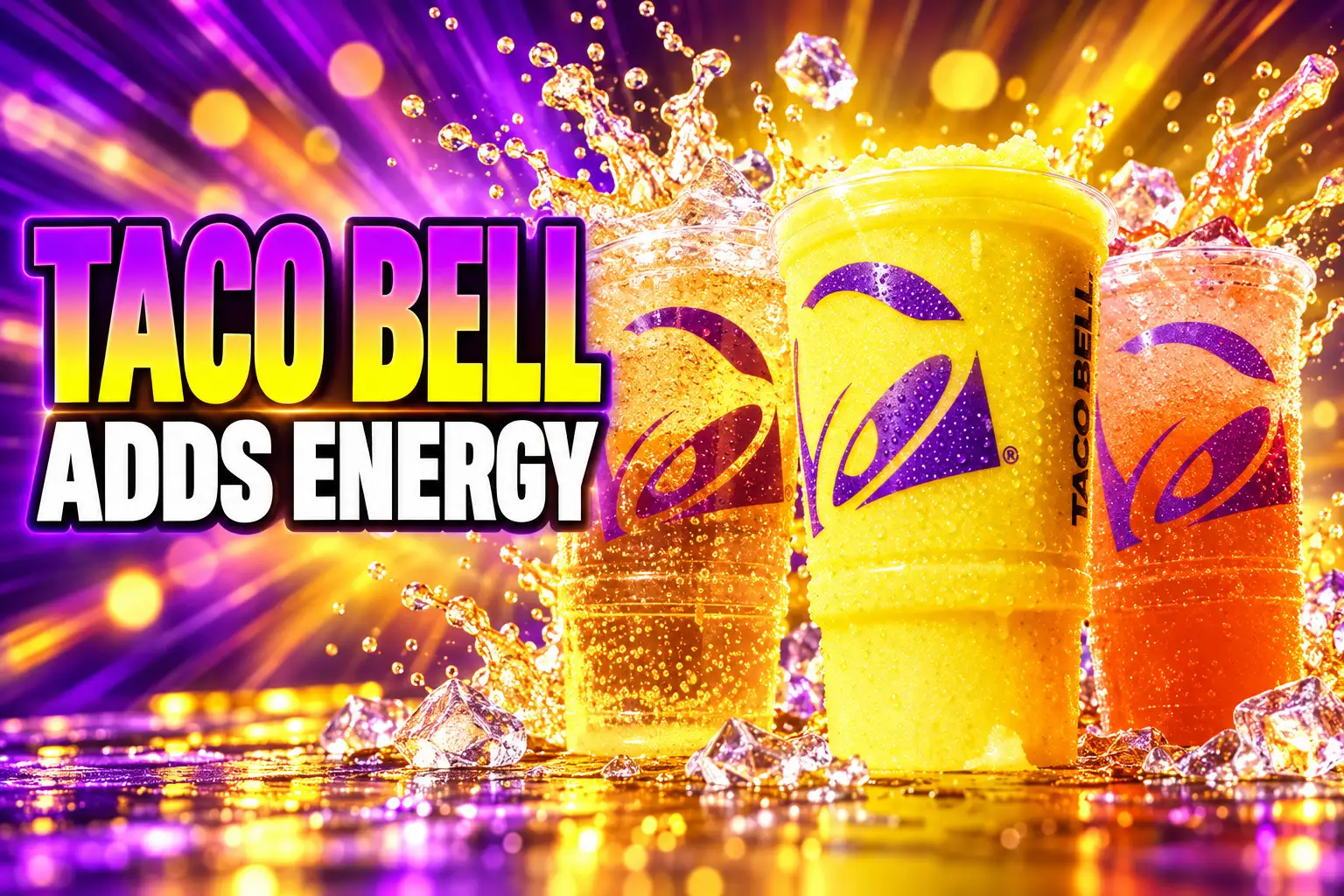
Taco Bell added three Taco Bell energy drinks to its national menu in late August, each with 120 milligrams of caffeine plus vitamin B. Launch copy priced the 20-ounce refreshers at $4.49 and a frozen pineapple citrus pour at $3.99, coffee-shop money for a taco chain.
The cups fill the hole between a 52 milligram green-tea refresca and a 200 milligram Rockstar pour, and they can sell at stores that will never hire a Bellrista.
Taco Bell Puts Energy on the National Menu
The company’s own drinks page now sells Pineapple Citrus Energy as a house pour, “Taco Bell Energy,” charged with B vitamins. The listing warns it is 120 mg per 20 oz drink, for adult use only, and not for children, pregnant or nursing women, or anyone sensitive to caffeine. It also tells guests not to stack it with other stimulants.
August launch notes used “Energy Refresher” on two still drinks and “Energy Freeze” on the blended one. The live menu is slightly blunter, and the related-item rail already shows a Regular Pineapple Citrus Energy Freeze at $3.99 and 150 calories, plus a Medium Strawberry Tropics Energy at $4.99 and 50 calories. Prices vary by restaurant, which is why the $4.49 figure from the rollout and the $4.99 figure on the board can both be true.
THE THREE NEW CUPS
- Pineapple Citrus Energy: Pineapple with tropical citrus in a 20-ounce still drink, 120 milligrams of caffeine, listed near $4.49 in the August rollout.
- Strawberry Tropics Energy: Tropical punch flavors, also 120 milligrams in 20 ounces, with the company’s menu showing a medium at $4.99 and 50 calories.
- Pineapple Citrus Energy Freeze: A frozen take on the pineapple citrus cup, 150 calories for the regular size at $3.99 on the same menu rail.
Those drinks join Agua Refrescas and Rockstar Energy Refrescas, which went national in June 2025 after Southern California tests. Cold brew arrived in May at Live Más Café, the in-store drink concept that opened in late 2024. The new line is the first time the chain has put a mid-dose “Taco Bell Energy” cup on the regular board, not only inside the café.
A Caffeine Ladder From Green Tea to Rockstar
Taco Bell did not need another energy drink to say it sells caffeine. It already had two rungs. Agua Refrescas mix freeze-dried fruit and green tea for 52 milligrams in a 20-ounce cup at $3.99. Rockstar Energy Refrescas, in Pineapple Lime and Tropical Punch, carry 200 milligrams in 20 ounces at $4.49, with the same adult-use warning the new drinks repeat.
One hundred twenty milligrams is the missing middle. It is stronger than the tea cup and far milder than Rockstar, and it lands next to the dose coffee shops now print on energy refreshers. Starbucks put Energy Refreshers on U.S. menus on April 7, with the mango strawberry version boosted to 125mg of caffeine in a grande plus B vitamins. Taco Bell’s 20-ounce house cup is the same neighborhood, without a barista and without a grande tax.
CAFFEINE ON THE QSR BOARD
| Drink | Chain | Caffeine | Serve |
|---|---|---|---|
| Agua Refrescas | Taco Bell | 52 mg | 20 oz |
| Pineapple Citrus Energy | Taco Bell | 120 mg | 20 oz |
| Rockstar Energy Refrescas | Taco Bell | 200 mg | 20 oz |
| Red Bull Dragonberry Energizer | McDonald’s | 80 mg | medium |
| Mango Strawberry Energy Refresher | Starbucks | 125 mg | grande |
The 50-calorie strawberry medium is the tell on who this cup is for. It is not a dessert freeze and not a 200 milligram night-shift can. It is a light, fruity afternoon drink that happens to carry a coffee-shop caffeine load, which is why the freeze can sit beside it at 150 calories for guests who want the colder, sweeter version of the same pineapple citrus idea.
How 120 Milligrams Buys an Afternoon Stop
Taco Bell’s food still bunches around lunch, late night, and value boxes. An extra crunchwrap does not create a 3 p.m. errand. A 120 milligram fruit cup can, because the guest is not ordering dinner and is not signing up for Rockstar’s 200 milligram hit.
Liz Matthews, Taco Bell’s global chief food innovation officer, said that out loud when the Refrescas line went national last summer, months before these three cups landed.
We’re seeing today that people, especially younger consumers, are reaching for refreshing drinks as part of their lifestyle, whether it’s for energy or a sweet treat throughout the day.
Liz Matthews, Global Chief Food Innovation Officer, Taco Bell Corp. release
She tied those refreshing drinks as part of their lifestyle to a larger bet: become “the ultimate beverage stop,” with the same odd flavor logic in the cup that the chain already uses on the food. The 120 milligram line is that idea stripped for stores that only have a drink station. Younger guests already treat cold, custom caffeine as an afternoon habit more than a morning coffee, and a taco chain that is open through that window can take the stop if the dose feels familiar.
A 200 milligram Rockstar cup is a different errand. It reads as an energy-drink run, the kind of pour people joke will make a heart race. One hundred twenty milligrams is close enough to a grande energy refresher that it can ride along with a snack, or stand in for the coffee shop that the guest was not going to visit anyway.
Inside 38 Cafés, the Cups Already Travel
Live Más Café is the loud version of the same plan. The first unit opened in late 2024 in Chula Vista, California, with franchisee Diversified Restaurant Group, and Yum Brands executives later told investors that location saw a 40 percent sales lift and about 300 specialty drinks a day. Bellristas hand-make more than 30 drinks, from Churro Chillers and specialty coffees to dirty Baja Blast sodas.
That room cannot carry a national drink business. Yum’s first-quarter 2026 remarks put the café pilot at 38 restaurants. Parent-company pages list Taco Bell as the largest Mexican-inspired chain in the world, with more than 9,000 restaurants worldwide and $18.361 billion in 2025 system sales. Thirty-eight cafés are a lab. The 120 milligram cups are how the lab’s milder caffeine idea leaves the lab.
THE CAFÉ CLOCK
- Late 2024: First Live Más Café opens inside a Chula Vista Taco Bell with Diversified Restaurant Group.
- June 26, 2025: Refrescas go national and the company says it will add 30 cafés in Southern California, Dallas, and Houston.
- End of 2025: The café footprint spreads through those markets and later into Las Vegas, with company stores and DRG sharing the build.
- May 2026: Cold brew joins the café board as another daytime caffeine hook.
- April 29, 2026: First-quarter remarks put the pilot at 38 restaurants and say 43 percent of specialty drink sales are stand-alone.
CMO Taylor Montgomery has said the aim is to get the café into every U.S. Taco Bell. Until that happens, and it will not happen this quarter, the national menu has to do the work. Yum already said it is taking café lessons systemwide, pointing to Midnight Baja Blast and Agua Refrescas as proof that a test drink can move without the full remodel. Pineapple Citrus Energy is that move for the mid-dose slot.
McDonald’s Poured an 80-Milligram Red Bull First
McDonald’s put a Red Bull Dragonberry Energizer on U.S. menus on August 17, days before Taco Bell’s national cups. The official product page says blue raspberry meets freeze-dried dragon fruit over ice, all powered by Red Bull, with 200 calories in the drink. The same page states Energizers contain 80mg of caffeine and are not recommended for children, pregnant or nursing women, or people sensitive to caffeine.
That is a weaker jolt than Taco Bell’s 120 milligrams, and it is a licensed can mixed with syrup and fruit pieces, not a house energy base. Alyssa Buetikofer, chief marketing and customer experience officer for McDonald’s USA, said fans loved the drink in U.S. tests and that the chain was “just getting started.” CEO Chris Kempczinski told investors guest checks are higher and “new occasions emerge throughout the day,” which is the same afternoon math Taco Bell is chasing, from a much larger breakfast-and-lunch machine.
Kitchen chatter around that launch has been less about flavor than about handling. Operators have described Red Bull locked up in some stores, with staff warnings not to drink the product, because a branded energy can in a McDonald’s make line is still an energy can. Taco Bell mixed “Taco Bell Energy” instead, so the 120 milligram cup can move like any other fountain drink. Panera’s Energy Refreshers, which joined in March, and the drink-first chains Dutch Bros, Scooter’s, 7 Brew, and Swig are in the same afternoon fight. Technomic has called energy drinks the fastest-growing drink subcategory on restaurant menus, with mentions up 45.8 percent from 2020 to 2025, and has grouped energy with cold specialty coffee as the leaders among younger guests.
Baja Blast already showed that Taco Bell can own a drink other chains cannot copy. The new cups try to do that for caffeine, with tropical flavors the chain already trained guests to expect, rather than pouring someone else’s 80 milligram Red Bull.
43 Percent of Specialty Cups Skip the Food
The café math only matters if drinks create tickets that would not exist. On Yum’s first-quarter 2026 call, the company said 43 percent of Taco Bell specialty beverage sales are stand-alone orders with no food. That is the afternoon visit in a number: a cup, not a combo.
In 2025, 62 percent of Taco Bell orders already included a drink, so the cheap upside is mixing people up from soda, and the expensive upside is pulling a guest who was not coming for a taco. Second-quarter results later showed Taco Bell same-store sales up 7 percent, with division system sales up 9 percent excluding currency. Drinks are not the whole comp, but they are one of the few items that can raise a check without another food LTO.
THE DRINK MIX YUM IS BANKING ON
- Stand-alone specialty: 43 percent of specialty drink sales in Q1 2026 remarks came with no food on the ticket.
- Orders with a drink: 62 percent of Taco Bell orders included a beverage in 2025.
- System scale: More than 9,000 restaurants worldwide, against a café pilot of 38.
- The 2030 line: Annual drink sales of $5 billion, a figure the company has repeated since the Refrescas launch.
That last number is Taco Bell’s $5 billion beverage target, and it does not come from 38 cafés. If drinks are going to behave like a top-20 restaurant brand on their own, the ordinary store has to sell them all day. A $4.49 to $4.99 cup on a ticket that used to hold a soda is one path. A 3 p.m. cup with no food is the path the 43 percent figure says is already open.
Drinks Built for Stores Without a Café
Franchisees who never get a Bellrista station still have to hit the same drink goal. The 120 milligram line is the version they can run with current equipment, current labor, and the same adult-use disclaimer already printed on Rockstar Refrescas. DRG and company stores can keep using Live Más Café as a flavor lab for chillers and cold foam. Everyone else gets pineapple citrus and strawberry tropics at 120 milligrams.
Matthews’s second line in that June release was that Taco Bell is putting “big investments” into becoming the drink stop, with the same “bold, unexpected creativity” in the cup as on the plate. The creativity in this launch is quieter than a Churro Chiller. It is a dose, a price, and a warning label that let a drive-thru sell an afternoon caffeine habit without rebuilding the front counter.
Participating U.S. restaurants now list Pineapple Citrus Energy at 120 milligrams per 20 ounces, for adult use only, with a warning not to combine it with other stimulants. The freeze is on the board at $3.99.

India’s 13.3 Crore Voter Cut Lands on the Election Commission

Reflection Bets $25 Billion on Beam’s Cheaper Open Weights

Denza Comes to India After Mercedes Walked Away

CJP Sets an October 10 March Over Voter-Roll Cuts

Amazon Drops Data Center NDAs but Leaves Older Deals Intact

Tesla Raises Dual Motor Prices as Texas Builds Cybercabs

Generation Lab’s Secret Youth Shot Has a Copycat Problem

The Nantucket Friendship Basket Boom Meets a Maker Shortage

Okta Stock Jumps 20% on McKinnon’s Identity Bet

Bristol Myers Quits Cellares as Autoimmune Doses Proceed
-
 AUTO1 month ago
Tesla Raises Dual Motor Prices as Texas Builds Cybercabs
-
 NEWS1 month ago
Generation Lab’s Secret Youth Shot Has a Copycat Problem
-
 LIFESTYLE2 months ago
The Nantucket Friendship Basket Boom Meets a Maker Shortage
-
 NEWS1 month ago
Okta Stock Jumps 20% on McKinnon’s Identity Bet
-

 LIFESTYLE1 month ago
Labor Day Mattress Sales Repeat a Familiar Holiday Discount
-
 BUSINESS1 month ago
Bristol Myers Quits Cellares as Autoimmune Doses Proceed
-

 NEWS1 month ago
Google Ends EU Spam Demotions but Keeps the Ranking Split
-

 BUSINESS2 months ago
Poland Closes Visa-Free Work for Three Fast-Growing Nationalities