
BUSINESS
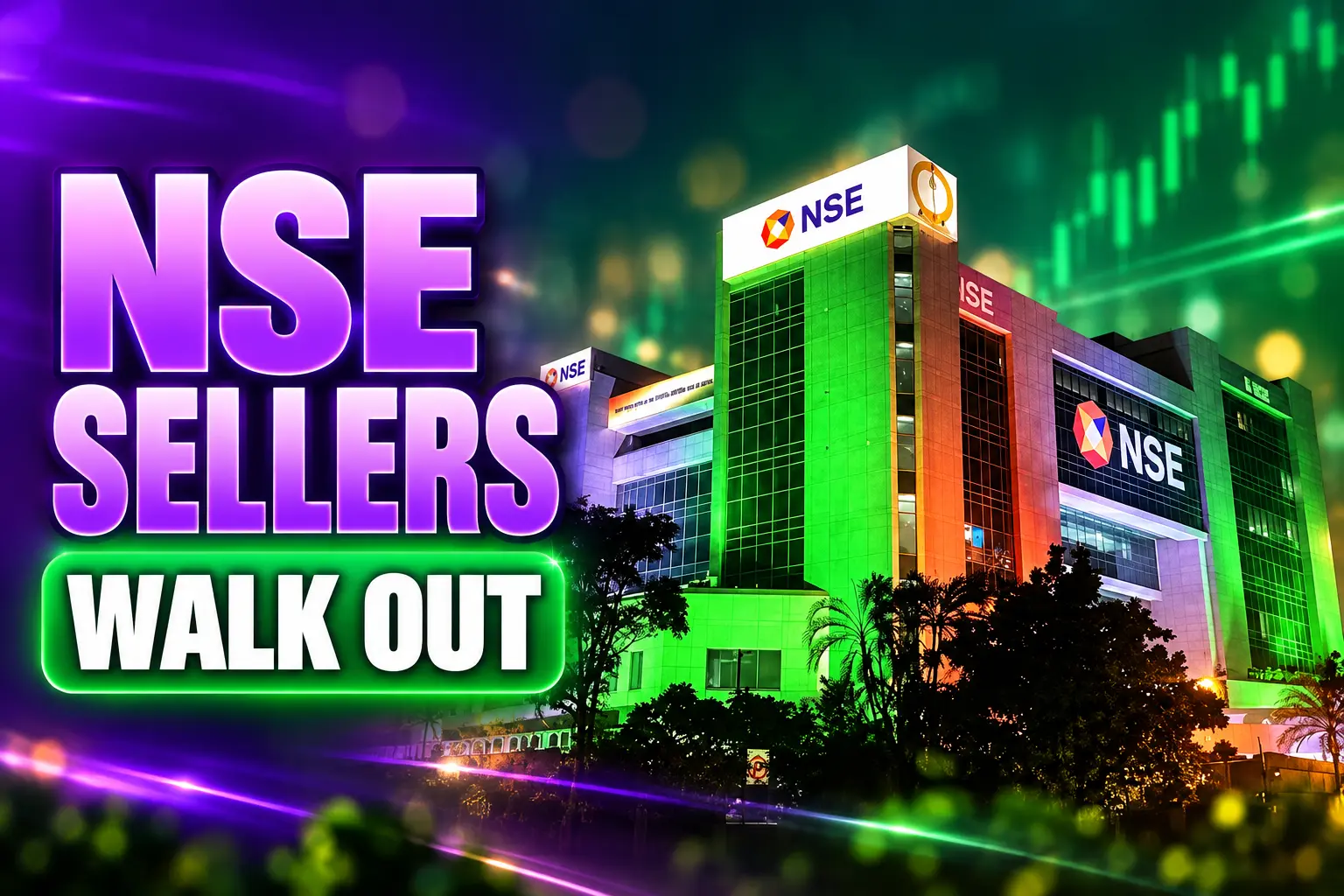
NSE Sellers Walk as Late Unlisted Buyers Eat the Cut
NSE may price its IPO at Rs 1,700 to Rs 1,785, about 13% below the Rs 2,045 unlisted print, after some sellers refused the lower exit and walked off the book.

NSE is likely to price its IPO at Rs 1,700 to Rs 1,785 a share, people familiar with the matter said on September 9. That cap is about 13% below the Rs 2,045 unlisted print from September 8.
The cut is smaller than a wipeout of every private holder. Some institutions have already refused the new exit. Life Insurance Corporation of India, the largest name on the register, is not selling at all.
Some Shareholders Would Rather Keep the Stock
The earlier marketed range was Rs 2,000 to Rs 2,100. At those prints, a 6% offer for sale looked large enough to take India’s IPO record. The new math does not.
People familiar with the matter said the stake on sale may shrink to about 5.5% of equity after some shareholders backed out at the lower price. At the cap, a 5.5% sale would raise about Rs 24,300 crore ($2.6 billion). That is below the Rs 27,900 crore Hyundai Motor India raised in 2024.
The exchange itself receives nothing. The issue is a pure secondary sale, set out in the draft red herring prospectus filed in June. Proceeds go to the selling names. NSE keeps the same 247.5 crore shares in issue, each of face value Rs 1, and lists on BSE.
WHAT WE KNOW
- The structure: The IPO is entirely an offer for sale; NSE raises no fresh capital.
- The regulator: Sebi cleared the prospectus on September 4, after a no-objection certificate on January 30.
- The tape: Off-market transfers in the shares closed on September 8 ahead of the issue.
WHAT IS UNCONFIRMED
- The band: Rs 1,700 to Rs 1,785 is the working range from people familiar with the matter, not a filed red herring prospectus.
- The size: A cut from 6% to about 5.5% has not been notified share by share.
- The calendar: Subscription is expected in the week beginning September 14, with a listing targeted for September 25, before Pitru Paksha starts on September 26.
An NSE representative did not immediately comment when asked about the revised range. Deliberations were still open, the people said, and the band and timing could still move.
Unlisted NSE Still Prints at Rs 2,045
The last off-market reference was an indicative unlisted price of Rs 2,045 on September 8, matching UnlistedZone’s close that evening. At that print the exchange is valued at Rs 5.06 lakh crore. The expected IPO cap values it at Rs 4.42 lakh crore, versus a previously targeted Rs 5.26 lakh crore.
NSE PRICE VERSUS THE UNLISTED TAPE
| Reference | Price (Rs) | Implied value |
|---|---|---|
| Unlisted print, September 8 | 2,045 | Rs 5.06 lakh crore |
| Expected IPO cap | 1,785 | Rs 4.42 lakh crore |
| Expected IPO floor | 1,700 | Rs 4.21 lakh crore |
| Earlier marketed cap | 2,100 | Rs 5.20 lakh crore |
Over the past year the private tape has also printed between Rs 1,950 and Rs 2,200. Unlisted Arena logged an all-time high of Rs 2,360 on June 12, 2025. Anyone who bought near that peak is already sitting on a mark well before the IPO band is advertised.
The upper IPO price is among the richest in the listed exchange universe. People familiar with the matter put it at 43.4 times last year’s earnings, which would rank NSE as the world’s eighth-largest exchange by market value, at $46.6 billion.
Who Owns India’s Largest Exchange
There is no identifiable promoter. LIC holds 26.53 crore shares, or 10.72% of the pre-offer capital, and is staying out of the sale. Radhakishan Damani holds 1.58%, or 3.91 crore shares. The 15 largest names together hold under half the company. About 53.5% sits in a long tail of funds, insurers, trading members and private buyers.
On September 7, trading members and their associates held 35.15% of paid-up capital, based on CDSL figures NSE publishes under Sebi’s market-infrastructure rules. Those holdings can only be dealt by fit and proper persons. That is a different book from the grey-market lots that changed hands in lots of five shares for about Rs 10,225.
The original draft listed an offer for sale of 14,89,05,525 shares, roughly 6% of equity. SBI and SBI Capital Markets together accounted for 2.475 crore of those shares. Morgan Stanley’s MS Strategic (Mauritius) put up 1.60 crore. Canada Pension Plan Investment Board, Temasek’s Aranda Investments, Bank of Baroda, Stock Holding Corporation of India and a cluster of public-sector insurers filled out the rest, with a handful of individuals selling a few hundred to 25,000 shares.
LARGEST NAMES IN THE ORIGINAL OFS
| Selling shareholder | Shares offered |
|---|---|
| MS Strategic (Mauritius) | 1,60,00,000 |
| State Bank of India | 1,59,69,410 |
| Canada Pension Plan Investment Board | 1,18,74,060 |
| Aranda Investments (Mauritius) | 1,12,46,336 |
| Bank of Baroda | 1,09,86,250 |
| Stock Holding Corp. of India | 1,08,90,000 |
| SBI Capital Markets | 87,80,590 |
If the book is cut to 5.5%, some of those lines will shrink or vanish. The people who described the revision did not name which sellers walked. The ones who remain are taking a public-market exit below last week’s private print. The ones who leave keep a stock that still dominates Indian cash and derivatives turnover.
A Six-Month Lock Follows the Listing
Late unlisted buyers are the only cohort that both paid above the expected cap and cannot sell into the listing. Sebi’s ICDR rules put a six-month lock-in on pre-issue capital held by persons other than promoters, running from the date of allotment. NSE has no promoter, so the residual book is covered.
WHAT THE LOCK ACTUALLY COVERS
- The residual register: Shares not sold in the offer for sale stay locked for six months after allotment.
- The free float: Only the stock sold in the IPO becomes freely tradable on listing day.
- The carve-outs: Employee stock under a disclosed scheme, and some Category I and II AIF holdings, can sit outside the rule.
- The grey-market lot: A five-share ticket bought near Rs 2,045 cannot be dumped into the listing auction to stop the loss.
That is the mechanical trap. A holder who bought at Rs 2,045 and sees a cap of Rs 1,785 is looking at Rs 260 a share of paper loss, then waiting half a year to do anything about it. A holder who bought years earlier, including through the November 2024 bonus, is still up even if the stock lists at the floor.
The same gap has shown up in other Indian IPOs. NSDL’s issue was priced at Rs 800 after unlisted deals as high as Rs 1,250. Swiggy came at Rs 390 after Rs 500 in the private market. HDB Financial Services listed against unlisted prints of Rs 1,525. Bankers leave room for the public book. The private tape often does not.
Profit Fell After the Options Clampdown
The cheaper band also tracks a slower year in the core business. Restated figures in the draft show revenue from operations of Rs 16,601 crore in FY26, down about 3% from Rs 17,141 crore. Profit after tax was Rs 10,302 crore, down about 15% from Rs 12,188 crore. Return on equity slipped to 32.98% from 45% a year earlier.
FY26 IN THE DRAFT NUMBERS
- Operating EBITDA margin: 66.85%, with EBITDA of Rs 11,098 crore and no borrowings on the books.
- Investor reach: 129.1 million unique investors, 253.7 million registered accounts, 1,325 trading members and 2,978 listed companies.
- Market share: 92.99% of cash turnover, 99.79% of equity futures and 74.71% of equity options by premium.
- Global rank: Largest equity derivatives exchange by contracts for a seventh year, with 36.99 billion contracts, per the World Federation of Exchanges.
Trading services still supplied 78.65% of operating revenue. Options remain the sensitive line. The government doubled the transaction tax on some derivatives and has proposed a higher short-term capital gains tax. Jefferies has flagged a Rs 1,390 crore colocation-related provision in FY26 and a Rs 670 crore TAP payment in FY25. A Sebi advisory panel in March recommended settlement terms of about Rs 1,491 crore in the long-running co-location and dark-fibre cases; as of the draft those applications were still pending.
The listed market around the deal is also weaker than the private tape implied. The Nifty 50 is down 10% in 2026, against a 25% gain in the MSCI Emerging Markets Index. First-time share sales in India have raised almost $10 billion in 2026, compared with more than $20 billion in each of the prior two years.
Weaker returns and persistent foreign outflows mean they now need a much stronger valuation argument before putting fresh money to work. New listings in India can still attract capital, but investors are becoming far more selective.
Hebe Chen, senior market analyst, Vantage Global Prime, Sydney
The dividend still went out. The board recommended Rs 35 a share for FY26, matching FY25, including a special component. Cash on the balance sheet was above Rs 32,261 crore as of March 31. The franchise can fund a payout and still cut the IPO price. Those are not the same decision.
The Largest IPO Tag Stays With Hyundai
Hyundai Motor India’s 2024 issue remains the domestic record if NSE’s sale lands near Rs 24,300 crore. Hyundai itself listed at Rs 1,934 on NSE, 1.3% below its Rs 1,960 issue price, after a 2.37 times subscription led by institutions. A discounted IPO price is no guarantee of a pop. It is a way to get the book done.
THE RUN-UP TO THE OPENING BELL
- January 30, 2026: Sebi grants NSE the no-objection certificate required for a market infrastructure institution to file an IPO.
- June 17, 2026: NSE files the draft prospectus for a 6% offer for sale of up to 14,89,05,525 shares.
- September 4, 2026: The regulator approves the prospectus.
- September 8, 2026: Off-market transfers close; the last unlisted reference is Rs 2,045.
- Week beginning September 14, 2026: Subscription window, with a listing targeted for September 25, the day before Pitru Paksha.
Kotak Mahindra Capital and Morgan Stanley India are among a long syndicate of book-runners. MUFG Intime is the registrar. The allocation template in the draft is the usual mainboard split: not more than 50% for qualified institutions, not less than 35% for retail, not less than 15% for non-institutional buyers. Jio Platforms is still in the wings with an estimated Rs 37,700 crore issue whose timing has not been set.
NSE will list on BSE. India’s largest cash and derivatives venue will have a quote on its rival’s board, while BSE already trades as a listed stock. The two exchanges will be comparable, in public, on the same screen.
Public Allottees Get the Discount Grey Buyers Missed
The people who apply in the IPO, if the band holds, are being offered the exchange at a 13% discount to last week’s private print. That is the point of leaving money on the table in a large offer for sale. Institutions that stay in the residual book, LIC first among them, keep a cash-rich monopoly that still clears most of India’s cash trades and almost all of its equity futures.
The people who bought unlisted lots near Rs 2,045 are the ones the headline is actually about. They paid a scarcity premium in a thin market, they do not get the IPO allocation mechanics, and they cannot sell for six months after listing. Some of the original sellers looked at the same number and chose not to sell.
The red herring prospectus and the advertised band will settle which of those groups still has stock in the offer. Until then the only firm prints are the June draft, the September 8 unlisted close, and a working range that already sits below both.
Disclaimer: This article is news reporting and analysis for information only. It is not investment advice, a recommendation to buy or sell National Stock Exchange of India shares or any other security, and it is not a solicitation to apply in the IPO or to deal in unlisted shares. Readers should consult a Sebi-registered investment adviser or their own broker before making any decision on the issue or on pre-listing stock. Deal terms, the price band and the figures cited reflect filings and people familiar with the matter as of the dates named above and may change when the red herring prospectus is filed.

Maharashtra Grants Nana Patekar a State Funeral at His Farm

Nifty Tests 22,600 as Banks Carry a Fragile Rebound

India’s 13.3 Crore Voter Cut Lands on the Election Commission

Reflection Bets $25 Billion on Beam’s Cheaper Open Weights

India Finishes Fourth Again, 21 Medals Short of Hangzhou

Tesla Raises Dual Motor Prices as Texas Builds Cybercabs

Generation Lab’s Secret Youth Shot Has a Copycat Problem

The Nantucket Friendship Basket Boom Meets a Maker Shortage

Bristol Myers Quits Cellares as Autoimmune Doses Proceed

Okta Stock Jumps 20% on McKinnon’s Identity Bet
-
 NEWS2 months ago
Generation Lab’s Secret Youth Shot Has a Copycat Problem
-
 AUTO2 months ago
Tesla Raises Dual Motor Prices as Texas Builds Cybercabs
-
 LIFESTYLE2 months ago
The Nantucket Friendship Basket Boom Meets a Maker Shortage
-
 BUSINESS2 months ago
Bristol Myers Quits Cellares as Autoimmune Doses Proceed
-
 NEWS2 months ago
Okta Stock Jumps 20% on McKinnon’s Identity Bet
-
 LIFESTYLE2 months ago
Labor Day Mattress Sales Repeat a Familiar Holiday Discount
-
 NEWS2 months ago
Ox Alpha Was a Chinese Chip Stress Test All Along
-

 NEWS2 months ago
Google Ends EU Spam Demotions but Keeps the Ranking Split