
BUSINESS
Butterball’s $34 Million Check Goes to Grocers, Not Shoppers
Butterball’s $34 million turkey settlement pads a $130.68 million pot for 1,675 direct buyers.

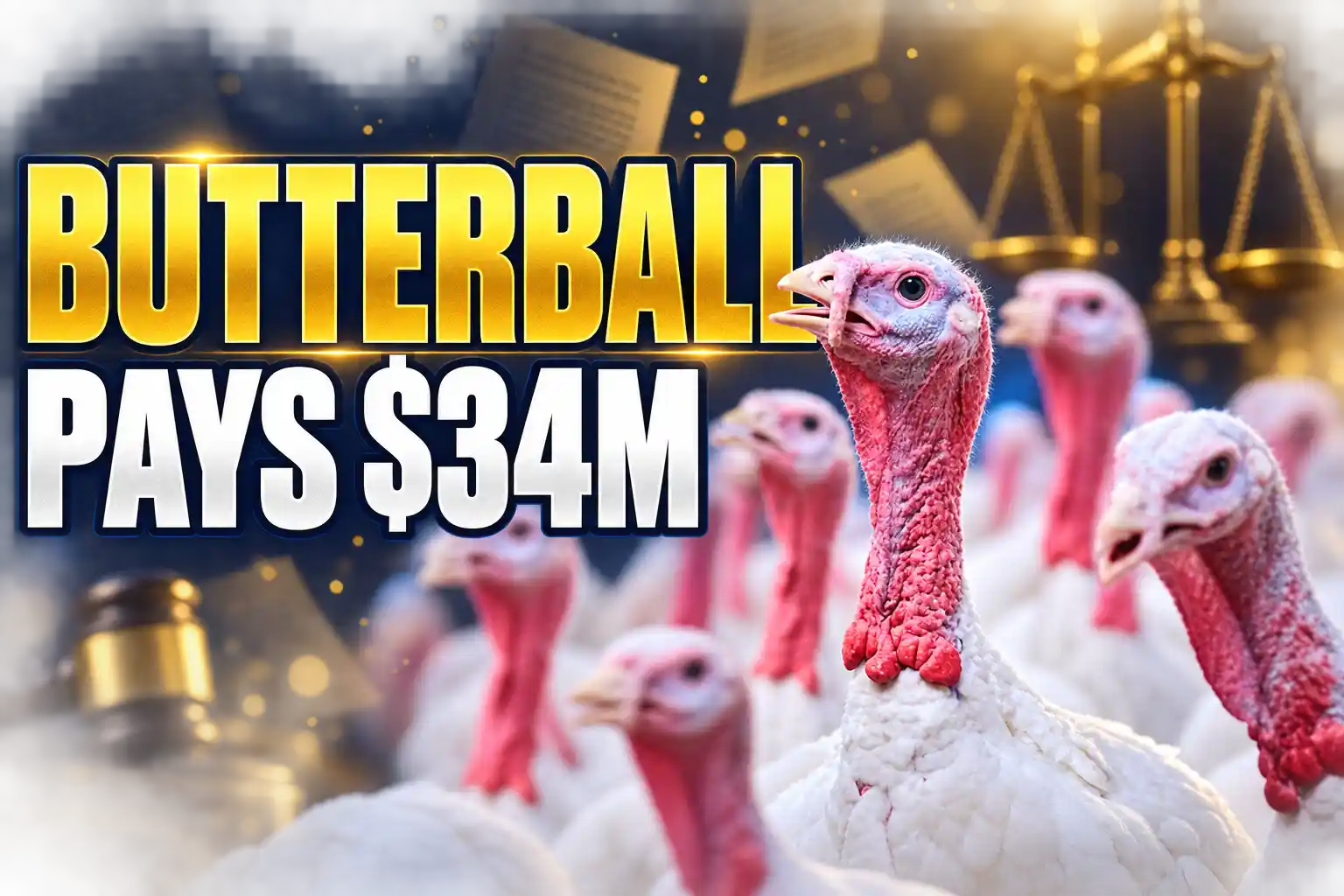
Butterball LLC will pay $34 million to end turkey price-fixing claims by direct buyers, and a Chicago judge gave that deal preliminary approval on August 26, 2026. The check is the last large processor payment into a $130.68 million fund for grocers and distributors, not for people who paid the grocery sticker.
North Carolina-based Butterball had been headed to a jury on October 8. The company signed the deal on August 19, after an in-person mediation in New York, less than two months before that trial date.
Butterball Pays $34 Million and the October Trial Disappears
Judge Sunil R. Harjani of the U.S. District Court for the Northern District of Illinois signed a preliminary approval order on August 26 that also covers a $37.5 million deal with Hormel Foods and Jennie-O Turkey Store. Together those two packages are $71.5 million. Co-lead class counsel asked the court to vacate the October trial calendar once Butterball, the last processor still on that docket, put a number on paper.
The case is In re Turkey Antitrust Litigation, No. 1:19-cv-08318. Direct buyers sued on December 19, 2019, saying turkey companies used Agri Stats reports on sales, output, and capacity to cut production and hold prices up. Processors have denied they broke the law. Butterball has not posted a public comment on the August deal.
Co-lead class counsel reached the settlement agreement with Butterball less than two months before trial through confidential, hard-fought, arm’s-length negotiations. While both parties were deep into preparing for trial, they also carried on intense and focused settlement negotiations, with multiple video conferences, phone calls and emails and ultimately concluding with an in-person mediation in New York City.
Plaintiffs’ memorandum in support of preliminary approval, August 21, 2026
Notice to the class is set to start September 15, 2026. Members have until October 30 to file claims or object. Counsel must seek final approval by November 10, and Harjani set a fairness hearing for November 24.
THE DATES THAT MATTER
- August 19, 2026: Butterball signs the $34 million deal after the New York mediation.
- August 26, 2026: The court gives preliminary approval to Butterball and to Hormel and Jennie-O.
- October 8, 2026: The jury trial date counsel asked the court to vacate.
- November 24, 2026: The fairness hearing, two days before Thanksgiving.
A deal at this stage still needs a final order. Until Harjani signs that, the $34 million is a promised check, not a mailed one.
Who Cashes the $130.68 Million?
Co-lead counsel Hagens Berman now lists direct purchaser settlements totaling $130.68 million. Butterball’s $34 million is 26 percent of that posted pot and sits on top of about $96.7 million already on the sheet. Agri Stats, the data firm named as the hub of the alleged exchange, is on the list at $0. Its private deal is conduct changes and trial cooperation, not cash.
DIRECT BUYER RECOVERIES POSTED
| Defendant | Amount | What the docket shows |
|---|---|---|
| Hormel and Jennie-O | $37.5 million | Preliminary approval, August 26, 2026 |
| Butterball | $34 million | Last processor on the October trial calendar |
| Cargill | $32.5 million | Earlier deal; claims window already closed |
| House of Raeford and Prestage | $18.7 million | Preliminary approval, July 30, 2026 |
| Tyson | $4.62 million | Earliest processor deal |
| Cooper Farms | $1.68 million | Earlier deal; claims window already closed |
| Farbest Foods | $1.68 million | Earlier deal; claims window already closed |
| Agri Stats | $0 | Conduct reform only |
| Foster Farms | $0 | Summary judgment, July 7, 2026 |
| Perdue | $0 | Summary judgment, July 7, 2026 |
Money that does go out will be split pro rata on approved turkey purchases, after fees, costs, and any service awards. An earlier class notice said counsel would ask for up to 33 and 1/3 percent of a settlement fund. That ask has not been ruled on for the Butterball pot. Grocery chains and distributors that file valid claims are the ones who see a check. Families who bought a bird at retail between 2010 and 2016 are not on that list.
Only 1,675 Direct Customers Sit in This Class
The certified class covers companies that bought fresh or frozen, uncooked turkey breast, ground turkey, or whole birds straight from the defendants in the United States from January 1, 2010, through December 31, 2016. The January 22, 2025, certification order counted 1,675 of those customers. Judge Harjani’s July 7 summary judgment opinion described them in plain terms.
The plaintiffs who bring these claims are direct purchasers of turkey products, such as national grocery stores, and indirect purchasers of turkey, such as restaurant chains.
Judge Sunil R. Harjani, summary judgment opinion, July 7, 2026
Federal law in this case pays the first buyer of the alleged overcharge. The household that later paid the sticker price is not in the certified group. Organic birds, no-antibiotics-ever birds, and cooked or ready-to-eat products are carved out of the class definition. Named defendants, their staff, and co-conspirators are out as well.
WHO IS IN, AND WHO IS NOT
- In the cash class: Grocers, wholesalers, and other firms that bought covered turkey straight from the processors in 2010 through 2016.
- On a separate docket: Restaurants, caterers, and cafeterias that bought the same products one step downstream, in states that allow those claims.
- Outside both classes: Household shoppers who paid retail for a Thanksgiving or weeknight bird.
- Opted out into their own suits: Direct-action plaintiffs named in the July 7 opinion, including Winn-Dixie, Bi-Lo, and Aramark.
Counsel’s case page puts the turkey business at about $4 billion a year and names brands that include Butterball, Jennie-O, Honeysuckle, Shady Brook Farms, and Hillshire. Co-conspirators listed in class notices include Dakota Provisions, Kraft Heinz, Michigan Turkey Producers, Norbest, and West Liberty Foods. Those names help explain why a loading-dock invoice, not a grocery receipt, is the ticket into this fund.
Foster Farms and Perdue Leave Without Paying
On July 7, 2026, Harjani granted summary judgment in full to Foster Farms and Perdue, wiping out every remaining claim against them from the classes and from the direct-action plaintiffs. They write $0 into the $130.68 million tally. The same order kept Butterball, Jennie-O, and Prestage on a per se conspiracy claim for trial after finding a jury could treat National Turkey Federation steering-committee talks and competitor contacts as an agreement to restrict supply. Rule-of-reason claims against those three were cut.
Prestage did not wait for the jury. Direct-buyer counsel gave notice of a Prestage deal on July 14. House of Raeford and Prestage then drew preliminary approval on July 30 for a combined $18.7 million. Jennie-O and Hormel followed. Butterball was the processor still on the October 8 calendar when it signed on August 19.
Holding out cost Butterball more cash than several earlier settlers posted. Tyson’s figure is $4.62 million. Cooper Farms and Farbest Foods each paid $1.68 million. Those early numbers do not prove a bargain, because turkey share is not even across the sheet, but the last two processor packages, $37.5 million and $34 million, are the heavy lines on the table.
A 2019 Case Ends in a New York Mediation
The complaint alleged that from at least 2010, processors watched one another’s output and prices through Agri Stats and, plaintiffs said, through National Turkey Federation channels, then held back birds and lifted what grocers paid. “As a result of defendants’ unlawful conduct, plaintiffs and the class paid artificially inflated prices for turkey during the class period,” the buyers wrote. “Such prices exceeded the amount they would have paid if the price for turkey had been determined by a competitive market.”
Judge Virginia Kendall denied a motion to dismiss on October 19, 2020. The file then ran through class certification, a stack of summary judgment briefs, and a parallel Justice Department case against Agri Stats in Minnesota. Private counsel settled Agri Stats in the turkey file on conduct terms. The government filed its own proposed decree on May 7, 2026, that would make Agri Stats stop providing any sales reports or non-public pricing data to processors, stop facility-level production and cost detail, and open most of what it still publishes to domestic buyers on equal terms.
When companies decide certain information is too sensitive to share with the broader market, but not too sensitive to share with their closest competitors, that is a significant red flag that competition is being harmed.
Omeed A. Assefi, Acting Assistant Attorney General, Justice Department Antitrust Division, May 7, 2026
HOW THE DOCKET GOT TO $34 MILLION
- December 19, 2019: Direct purchasers file the turkey antitrust complaint in Chicago.
- October 19, 2020: The court denies the motion to dismiss.
- January 22, 2025: The court certifies the 1,675-customer direct-buyer class.
- May 7, 2026: The Justice Department files its proposed Agri Stats settlement in Minnesota.
- July 7, 2026: Foster Farms and Perdue win summary judgment; Butterball, Jennie-O, and Prestage are held for trial.
- August 19, 2026: Butterball signs the $34 million deal in the wake of the New York mediation.
- August 26, 2026: Harjani preliminarily approves Butterball and the $37.5 million Hormel and Jennie-O package.
Acting Attorney General Todd Blanche tied the Minnesota decree to grocery prices, saying a stable and affordable food supply is critical. That government file does not put money into the Chicago class. Shoppers who want a lower bird this fall are watching production and the wholesale hen market, not this settlement spreadsheet.
Restaurants Are Still Waiting on Their Own Case
The Butterball check closes the processor list for certified direct buyers. It does not, on its face, pay restaurants and cafeterias. A separate class of commercial and institutional indirect purchasers covers entities in indirect-purchaser states that bought the same uncooked turkey for commercial kitchens from January 1, 2010, through December 31, 2016. That site still lists much smaller cash: $4 million from Cargill and $562,500 each from Cooper Farms and Farbest Foods, or $5,125,000 in all. Direct buyers have posted about 25 times that figure.
The commercial site has listed Butterball among defendants that had not settled that track. House of Raeford, Prestage, Hormel, Jennie-O, and Agri Stats appear there as well, depending on the notice date. Direct-action plaintiffs who opted out, including Winn-Dixie, Bi-Lo, and Aramark, keep their own claims. Anyone treating August 26 as the end of every turkey file in Chicago is reading only the grocer column.
WHAT WE KNOW
- Direct-buyer cash: Counsel’s sheet now totals $130.68 million, with Butterball at $34 million.
- Walk-aways: Foster Farms and Perdue pay $0 after the July 7 order; Agri Stats pays $0 in cash.
- Class limit: Household retail buyers are not in the certified direct class.
WHAT IS UNCONFIRMED
- Final approval: The Butterball and Hormel deals still need a November 24 order, and objections can still be filed through October 30.
- Restaurant money: No public Butterball figure has been posted for the commercial indirect class.
- Net checks: What each grocer actually receives depends on claims, the fee award, and any appeal.
In the broiler-chicken files, an end-user consumer class took in $203.35 million from processor defendants. Turkey never built that household track. The people who will argue over this $34 million in November are purchasing managers, not home cooks.
The Fairness Hearing Falls on Thanksgiving Week
Harjani will take up final approval on November 24, 2026, two days before Thanksgiving. Class members who want a share of the new pots have a claims deadline of October 30, and the administrator’s site for direct buyers is TurkeyLitigation.com. Older Cargill, Tyson, Cooper Farms, and Farbest claims windows have already closed.
If the court signs off, Butterball’s $34 million moves from a settlement fund into pro rata payments on 2010-2016 invoices. The October jury that would have heard National Turkey Federation steering-committee evidence will not sit. Foster Farms and Perdue stay off the check register. Restaurants keep their thinner file. And the shopper who will pay for a Butterball bird that week still has no claim in this class.
Disclaimer: This article is news reporting on a pending federal class-action settlement and related court orders. It is for information only and is not legal advice, tax advice, or a recommendation to file, object, or opt out. Anyone who bought turkey from processors or used turkey in a commercial kitchen during the class period should consult a licensed attorney about their rights, deadlines, and any claim form before acting. Figures, hearing dates, and party statuses reflect the court papers and class notices available as of September 2, 2026, and may change if the court denies final approval, if an appeal is filed, or if remaining plaintiff groups settle on different terms.

Maharashtra Grants Nana Patekar a State Funeral at His Farm

Nifty Tests 22,600 as Banks Carry a Fragile Rebound

India’s 13.3 Crore Voter Cut Lands on the Election Commission

Reflection Bets $25 Billion on Beam’s Cheaper Open Weights

India Finishes Fourth Again, 21 Medals Short of Hangzhou

Tesla Raises Dual Motor Prices as Texas Builds Cybercabs

Generation Lab’s Secret Youth Shot Has a Copycat Problem

The Nantucket Friendship Basket Boom Meets a Maker Shortage

Bristol Myers Quits Cellares as Autoimmune Doses Proceed

Okta Stock Jumps 20% on McKinnon’s Identity Bet
-
 NEWS1 month ago
Generation Lab’s Secret Youth Shot Has a Copycat Problem
-
 AUTO1 month ago
Tesla Raises Dual Motor Prices as Texas Builds Cybercabs
-
 LIFESTYLE2 months ago
The Nantucket Friendship Basket Boom Meets a Maker Shortage
-
 BUSINESS1 month ago
Bristol Myers Quits Cellares as Autoimmune Doses Proceed
-
 NEWS1 month ago
Okta Stock Jumps 20% on McKinnon’s Identity Bet
-

 LIFESTYLE1 month ago
Labor Day Mattress Sales Repeat a Familiar Holiday Discount
-

 NEWS1 month ago
Google Ends EU Spam Demotions but Keeps the Ranking Split
-

 BUSINESS2 months ago
Poland Closes Visa-Free Work for Three Fast-Growing Nationalities