
GAMING
NIKKE’s PC Launcher Ran a Remote-Access Agent for Weeks
Poisoned scripts on Level Infinite’s servers turned the NIKKE PC launcher into a remote-access dropper, and cleanup still runs through it.

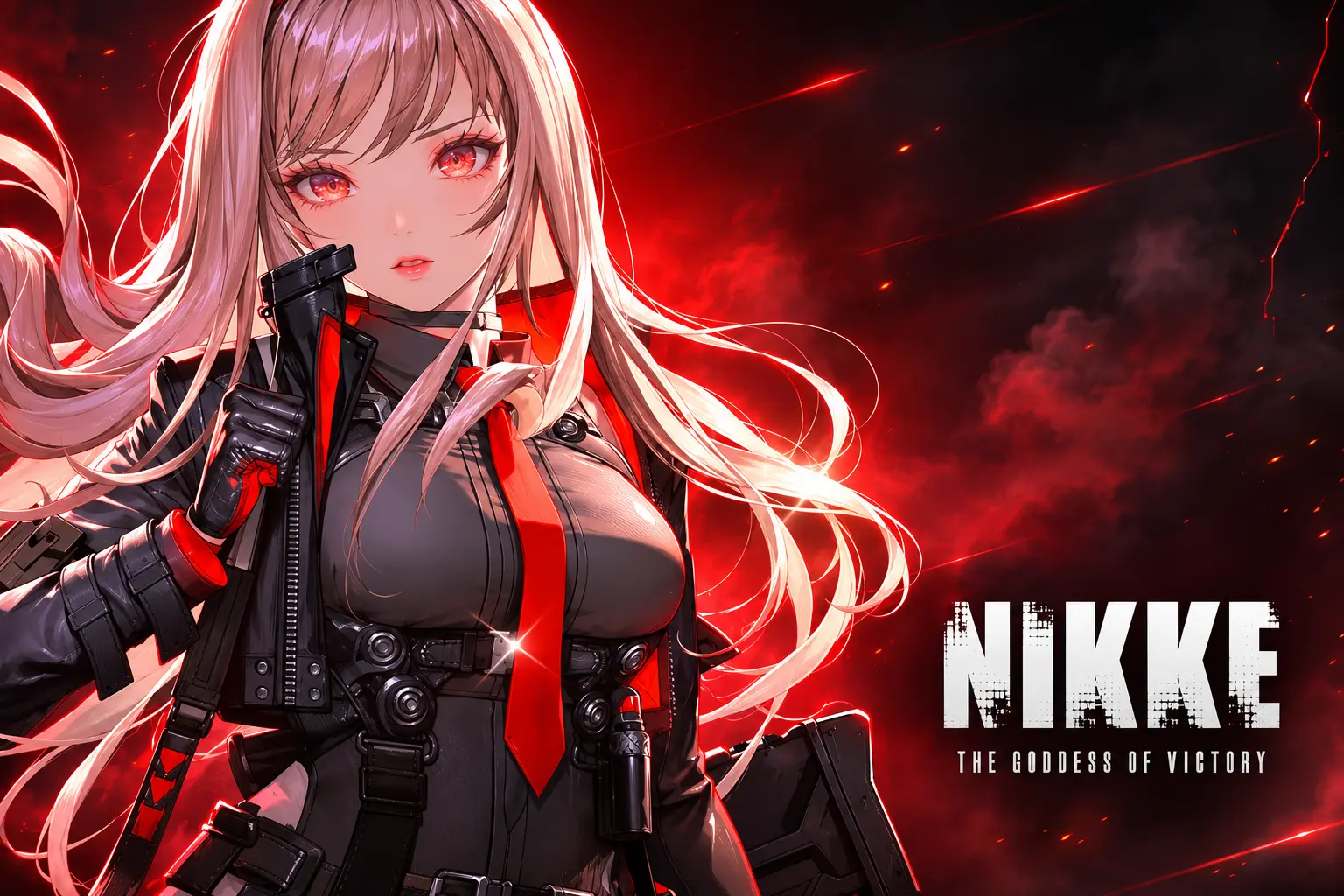
Level Infinite confirmed on November 4 that tampered scripts in the Goddess of Victory: NIKKE PC launcher could install a remote-access agent on players’ computers. The files sat on the publisher’s own download servers from September 27. Opening the launcher was enough.
A live-service launcher that executes JavaScript from those servers became a remote-control channel. The official cleanup still walks through that same door.
The Launcher Fetched Its Own Poison
Shift Up builds NIKKE. Level Infinite, Tencent’s global games label, publishes it and runs the Windows client. That client is a small web stack: it pulls script files from playerinfinite.com every time it starts, then renders news, banners and login inside an embedded browser named tbs_browser.exe.
Independent researcher MotherSphere found that from September 27 those scripts carried extra code. Security firm Ostorlab later mapped the same chain. No extra click was required. The launcher asked its usual hosts for its usual files, and the hosts handed back copies that reached out to insightjs.com.
The game has more than 45 million downloads, a lifetime figure for every platform, not a count of Windows installs. Level Infinite has not said how many PCs opened the launcher in the window. It has said the mobile app was not part of this incident.
Ostorlab listed four official JavaScript files on the publisher’s content network as the entry points. Each one loaded a second script from insightjs.com, with a fallback to insightjs.org if the first name failed.
THE FOUR TAMPERED LAUNCHER SCRIPTS
| File | Host | Loader it pulled |
|---|---|---|
| aegis-fix.min.js | sg-gpts.playerinfinite.com | insightjs.com/l.js?f=aegis |
| images.7fec4c32.js | na-webassets.playerinfinite.com | insightjs.com/l.js?f=images |
| FeedList.feb647c9.js | na-webassets.playerinfinite.com | insightjs.com/l.js?f=feedlist |
| vue-bucket.min.js | na-webassets.playerinfinite.com | insightjs.com/l.js?f=vue |
In FeedList.feb647c9.js the added 708 bytes sat just before the final export line, so a check that only compared the end of the file would miss them. The URL itself was stored as an integer array, not as readable text.
Four JavaScript Files Changed in One Minute
Last-modified stamps on the four files fall between 06:41 and 06:42 GMT on September 27, which is 15:41 to 15:42 in Korea and Japan. Level Infinite’s own clock starts at 10:59 that morning, when it says a third party took over insightjs.com, a name it called an open-source domain used by some game services.
THE NIKKE LAUNCHER INCIDENT CLOCK
- September 27, 2026: insightjs.com is registered at 01:59 GMT, and the four launcher scripts on the CDN are modified at 06:41 GMT.
- September 30, 2026: the earliest reported lookups of the loader domain appear in player DNS logs.
- October 23, 2026: the earliest reported start of the K2F agent, at 16:40 GMT, on a victim machine.
- October 28, 2026: FeedList.feb647c9.js is replaced with a clean copy at the origin, while some CDN nodes keep serving the old one.
- October 30, 2026: Level Infinite dates the start of malicious-program distribution at 03:52 UTC+9 (18:52 GMT on October 29).
- November 4, 2026: the publisher says it spotted the anomaly around midnight UTC+9, replaced three files by 02:23, shipped a client update around 02:30, and finished the remaining CDN cache refresh at 12:09.
- November 5, 2026: the official PC client starts an ACE scan at 08:00 UTC+9, and the registrar suspends insightjs.com at 02:05 GMT.
- November 8, 2026: volunteer researchers send a full report to Level Infinite and to CERTs in Singapore, Korea, Japan and the United States, with a 30-day deadline to fix remaining launcher holes.
Those two October dates describe different things. MotherSphere’s static analysis of the payload puts an agent start on a player’s PC at 16:40 GMT on October 23. Level Infinite’s notice puts distribution at 03:52 UTC+9 on October 30, a timestamp that also matches the compile time of a persistence DLL. The loader had already been sitting in the four files since September 27. On one machine the agent ran on 3 of about 19 launches, so a clean boot that week was not proof of a clean PC.
An Expired Domain, Then a Write to the CDN
Level Infinite’s notice frames insightjs.com as hijacked. The public record is narrower. The insightjs.com registration on September 27 is a new create, handled through PDR Ltd. (PublicDomainRegistry), later placed on client hold with suspended-domain name servers after the registrar stepped in on November 5.
Certificate logs show the name had a previous life. Amazon-issued certificates for api.insightjs.com and cdn.insightjs.com run from 2019 to 2022, and an archived page from 2017 still exists, so the name lapsed and was registered again. The new server was answering HTTP by 04:08 GMT on September 27, a few hours before the CDN files changed.
That still does not explain the write to Level Infinite’s storage. MotherSphere checked the clean scripts from before September 27 and found no call to insightjs.com. Owning a lapsed name does not grant access to Tencent object storage on playerinfinite.com. The attacker obtained the domain and changed the four files as two separate moves. How they got write access to the CDN is still unknown.
The first public word from the NIKKE English account, on November 4, called it an anomaly and said a client fix had already gone out around 02:30 UTC+9.
【Notice Regarding PC Launcher Anomaly】
We have identified an issue indicating that the PC Launcher's script files may have been tampered with by a third party.
Accordingly, client fixes and an update were implemented on November 4 at approximately 02:30 (UTC+9).
We are… pic.twitter.com/0lqtlWKtcR
— GODDESS OF VICTORY: NIKKE – 4th Anniversary (@NIKKE_en) November 4, 2026
What the K2F Agent Could Take From a PC
The second stage used the launcher’s own download bridge, Srv_DownloadFile, to fetch a LuaJIT bundle named insight.bundle, 205,135 bytes in the copy Ostorlab hashed. The launcher saved it under a.log name in Launcher\log\tinyget\, ran it, then deleted it. An earlier build left a file called k2f.lua on disk. The agent registered a channel named k2f_chan inside the launcher and waited for orders. It did not need to do anything on its own.
Windows, Linux and Steam Deck installs running the launcher through Proton sat in the same window, as did the Google Play Games PC build that lives under C:\NIKKE_GOOGLE. The standard Windows launcher asks for administrator rights, so the agent ran with the player’s full local reach, and often stayed up in the notification area while the game itself ran.
WHAT THE AGENT COULD REACH
- Shell and files: It could run any program the player could run, browse folders, and copy any file it could see.
- The screen: A screens command captured every monitor.
- NIKKE login: A creds command decrypted the account and password the launcher had saved.
- Browsers: A browserscan command read saved passwords from Chrome, Edge, Brave, Vivaldi, Opera and Firefox, plus cookies from the Chromium browsers.
- Developer secrets: A keyscan command read 264 credential and configuration paths, including Windows Credential Manager entries used by developer tools.
- Wallets: A wallet_files command read data from 28 crypto wallet extensions in Chrome profiles.
- After close: On Windows it could install a Chrome DLL under PlatformExperienceHelper so access continued after the launcher quit.
Search Launcher\intl_service\debug.log for the string k2f_chan. A line that says k2f_chan registered means the agent downloaded and ran. A launch that logs startup failed: EIO: invalid UTF-8 in string, with no adopted line after it, still means it ran. The log is appended, not overwritten, so an old hit can sit under later clean boots.
A pop-up warning inside the launcher is a weaker signal. After the incident became public, insightjs.org served a page that called itself an independent notice. That page appeared when the modified script could not reach the attacker’s server, so it shows the first-stage loader ran, not that the remote-control program did. Missing the warning does not clear a PC either.
Cleanup Still Runs Through the Same Launcher
Level Infinite’s follow-up measures on the incident asked every player who opened the Windows PC launcher at least once after 15:41 UTC+9 on September 27 to run a security check. From 08:00 UTC+9 on November 5 the official client includes an ACE feature that looks for the malicious program at launch and, if the player agrees, deletes related logs, DLL files and registry entries. The manual guide says to close every browser, Chrome included, before that scan, so files are not locked.
The same notice says the copy of the launcher now being distributed is safe to use. That claim covers the files on the CDN. It does not, by itself, clean a machine that already pulled the old ones, and it does not fix the design that loaded those files with no intact check. The launcher cache at %APPDATA%\nikke_launcher\tbs_cache can still hold the modified scripts and feed them back in. MotherSphere’s advice is to copy debug.log and the cache first, then delete tbs_cache, because the official scan can erase the traces that prove the agent ran.
Kim Hyung-tae, Shift Up’s chief executive, wrote in his apology to commanders on X that a problem had occurred with the PC launcher, that the studio was working with Level Infinite, and that it was putting every resource into a fundamental fix. A later note from him said the inspection program in the updated launcher would check and try to resolve the security status when the client starts.
An official program intended to let players enjoy the game should never become a threat to their safety.
GODDESS OF VICTORY: NIKKE Operations Team, November 4 apology
The publisher prepared in-game compensation for all commanders and said it would review reports through customer support for gameplay harm, outside account theft, or secondary financial loss. Its published steps still do not tell players to move crypto out of browser wallets, or to sign out of Google, Discord, Steam and GitHub sessions whose cookies would work without the password.
WHAT WE KNOW
- The vector: Four official launcher scripts on Level Infinite’s CDN were modified on September 27 and could load a remote-access agent.
- The window: Level Infinite asks anyone who opened the Windows launcher after 15:41 UTC+9 on September 27 to check; the mobile app is outside this incident.
- The files: The four scripts were replaced on November 4, and insightjs.com has been on registrar hold since November 5.
WHAT IS UNCONFIRMED
- Victim count: Level Infinite has not published how many PCs ran the agent, or in which regions.
- CDN write: How the attacker obtained write access to playerinfinite.com is still unknown.
- Theft: Volunteer trackers had no confirmed drained wallet or account takeover tied to the launcher in their public issues as of November 8, which is not a reason to skip password and wallet changes.
Players who still boot NIKKE on a Windows machine have started treating tbs_browser.exe as the pipe to cut. Blocking that embedded browser at the firewall stops the news feed, banners and videos; login and play continue. It does not remove an agent that is already there, and it does not cover the launcher’s own updater.
Researchers Gave Level Infinite 30 Days
On November 8, volunteer researcher whyKusanagi wrote that testing after the file swap was not enough to close the book. “There are still unresolved security problems with the PC launcher,” the update said. A full report went to Level Infinite and to the national computer emergency response teams in Singapore, Korea, Japan and the United States, with a 30-day deadline to fix them. Proxima Beta, the Singapore company that runs Level Infinite, is why Singapore sits on that list.
On November 10, MotherSphere wrote that the same report had been reviewed independently and that the launcher still has unresolved security problems, some of them serious. Details of those findings stay private until the publisher has had time to patch. Community checkers filled the gap the first notices left: NIKKE Launcher Check was downloaded about 77,000 times in the first days, and whyKusanagi’s kit about 26,000 times. Those are downloads, not unique PCs, and they measure worry as much as infection.
The remaining argument is simple. The K2F campaign stopped when the four files were replaced and the domain was suspended. The launcher still loads web scripts through an embedded browser, still talks to a content network whose write path has not been explained in public, and still asks players to trust a scan that arrives through the same client that delivered the agent. Until that design changes, a second write to the same hosts would look like another news-feed refresh.
Level Infinite has promised tighter monitoring, an integrity check on external resources the launcher fetches, and least privilege on client features. It has not said how many commanders need to rotate a wallet seed. Anyone who opened the Windows launcher after 15:41 UTC+9 on September 27 still has a log to search and a cache to clear, and the 30-day clock started on November 8.
Disclaimer: This article is news reporting and technical summary of a published security incident, and it is for information only. It is not cybersecurity, legal or financial advice, and it is not a guide to recovering stolen cryptocurrency, passwords or game accounts. Readers who think a PC, wallet or login was exposed should consult a qualified security professional, and where money moved, a lawyer or the relevant financial institution, before they delete logs, reinstall a system or transfer funds. Dates, file states and cleanup steps reflect the publisher notices and independent write-ups cited above and can change as the investigation continues.

ACCC Margin Checks Bind Woolworths and Coles Alone

Meta Verified the Fake AI Doctor Selling Amazon Cures

Skydance Installs Film Chiefs to Hit a 30-Movie Quota

Apple Bets Slow Horses Can Outlast Mick Herron’s Novels

F.P. Journe Collectors Won Geneva as Jewels Slipped

Generation Lab’s Secret Youth Shot Has a Copycat Problem

Tesla Raises Dual Motor Prices as Texas Builds Cybercabs

The Nantucket Friendship Basket Boom Meets a Maker Shortage

Bristol Myers Quits Cellares as Autoimmune Doses Proceed

Okta Stock Jumps 20% on McKinnon’s Identity Bet
-
 NEWS3 months ago
Generation Lab’s Secret Youth Shot Has a Copycat Problem
-
 AUTO3 months ago
Tesla Raises Dual Motor Prices as Texas Builds Cybercabs
-
 LIFESTYLE3 months ago
The Nantucket Friendship Basket Boom Meets a Maker Shortage
-
 NEWS3 months ago
Okta Stock Jumps 20% on McKinnon’s Identity Bet
-
 BUSINESS3 months ago
Bristol Myers Quits Cellares as Autoimmune Doses Proceed
-

 BUSINESS3 months ago
Poland Closes Visa-Free Work for Three Fast-Growing Nationalities
-

 LIFESTYLE3 months ago
Labor Day Mattress Sales Repeat a Familiar Holiday Discount
-

 NEWS3 months ago
Google Ends EU Spam Demotions but Keeps the Ranking Split