
BUSINESS
RBI Shuts Tata Sons’ Last Path to Stay Private
RBI shut Tata Sons’ last route to stay private, ending years of CIC manoeuvres and opening a market for the Mistry family’s stake.

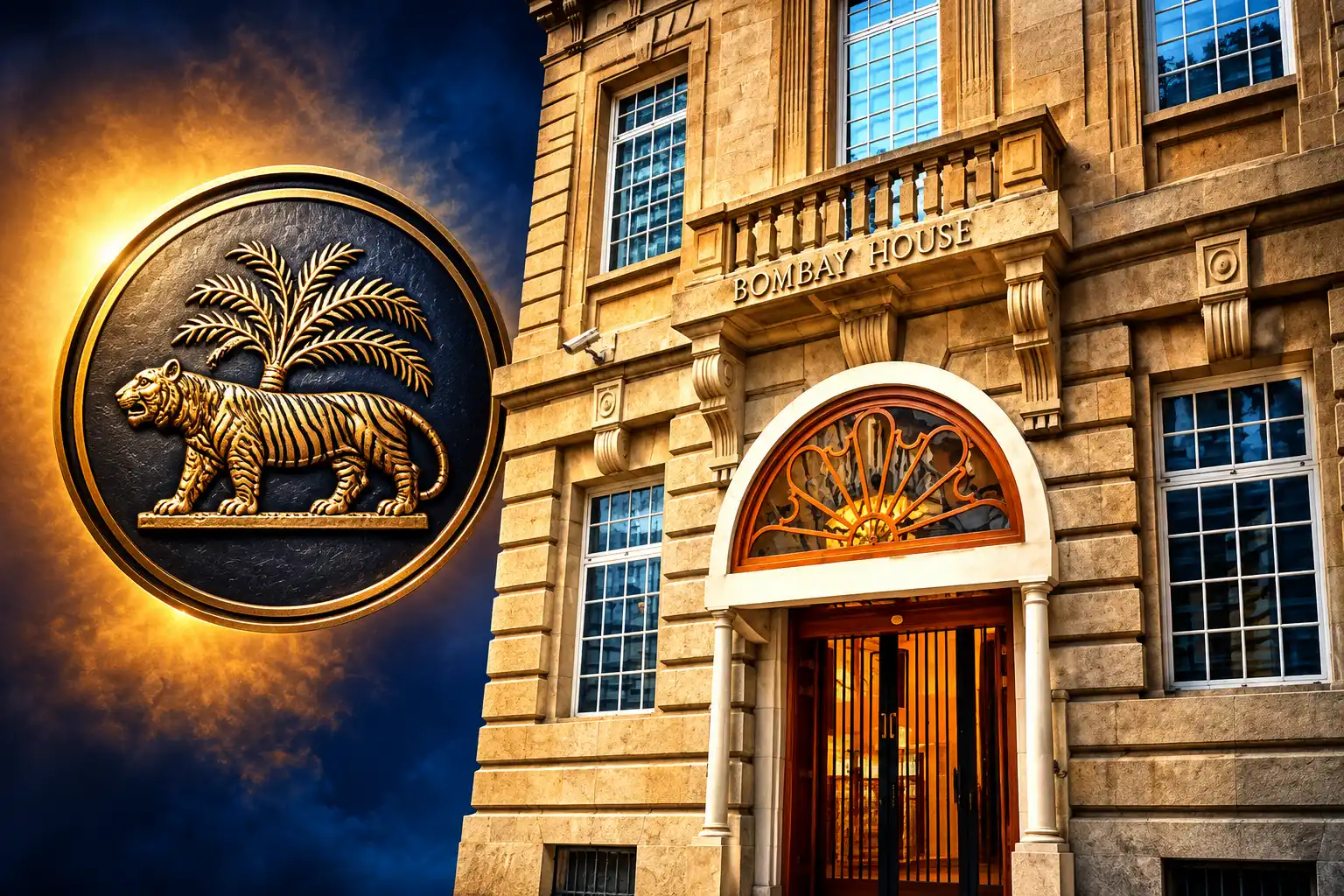
The Reserve Bank of India told Tata Sons on September 11, 2026, that it cannot drop its core investment company licence and must comply with upper-layer listing rules. The holding company of the Tata group had applied on March 28, 2024, to surrender that licence after paying off its debt. Tata Sons did not comment, and the central bank did not issue a public statement on the letter.
The rejection closes a route Tata Sons has worked since it converted to a private company in 2017, and it lands on a board that already has a chairman on the way out.
The Letter That Ended a Two-Year Wait
People who have seen the September 11 letter say the Department of Regulation wrote that, after considering the March 28, 2024 application and later correspondence, the request for voluntary surrender of the certificate of registration could not be acceded to. The bank then told Tata Sons Private Limited to take the steps needed for full compliance with the rules that apply to upper-layer non-bank companies, which include a stock-market listing.
That application had sat for more than two years. In August the same department still listed Tata Sons as a core investment company on the 2026-27 upper-layer roster and said the inclusion was without prejudice to the pending deregistration bid. The September 11 letter ends that holding pattern.
THE RBI FILE
- The letter: Dated September 11, 2026, it refuses the March 28, 2024 request to give up the core investment company certificate.
- The size test: Tata Sons’ standalone assets were Rs 2.01 lakh crore on March 31, 2026, more than twice the Rs 1 lakh crore upper-layer threshold set on June 24, 2026.
- The list: On August 6, 2026, the Reserve Bank named Tata Sons among 17 upper-layer NBFCs for 2026-27, using financials as of March 31, 2026.
- The silence: Tata Sons did not comment on the letter, and the Reserve Bank did not reply to queries about it.
Governor Sanjay Malhotra had already framed the new test as principle-based when asked, after an August policy meeting, whether Tata Sons would stay in the upper layer.
So, as per those principles, everyone knows what the list is. And so that is where the matter stands.
Sanjay Malhotra, Governor, Reserve Bank of India, after the August policy meeting
The letter is the first hard answer to that list. It does not set an IPO date, name a book-runner, or say what share of Tata Sons must be sold. It puts the holding company back inside a rulebook it tried to leave.
Tata Sons Went Private to Keep Control
The listing fight did not start with the 2021 non-bank rules. It started when Tata Sons moved to lock in private-company status after the ouster of Cyrus Mistry, whose family remains the largest minority holder through the Shapoorji Pallonji group.
Shareholders voted on September 21, 2017, to convert the holding company from a deemed public company into a private limited company. The Shapoorji Pallonji group opposed the change, arguing it would make the shares harder to transfer. The National Company Law Tribunal cleared the conversion in July 2018, the Registrar of Companies recorded it the next month, and the Supreme Court on March 26, 2021, rejected the Mistry group’s challenge.
That judgment closed the company-law fight. It did not close the non-bank fight that followed.
THE PRIVATE-COMPANY PROJECT
- September 21, 2017: Shareholders approve conversion of Tata Sons from a deemed public company into a private limited company.
- July to August 2018: The company-law tribunal and the Registrar of Companies clear the private-company change.
- March 26, 2021: The Supreme Court upholds the conversion and rejects the Mistry group challenge.
- October 2021: The Reserve Bank issues scale-based rules for non-bank companies, with an upper layer that must list within three years of identification.
- September 30, 2022: Tata Sons appears on the original September 2022 upper-layer list of 16 names, as the only core investment company in that set, starting a listing clock to September 30, 2025.
- March 28, 2024: After repaying debt in FY24, Tata Sons asks to surrender its core investment company registration.
- July 2025: Tata Trusts, which own about 66 percent of Tata Sons, pass a resolution against listing the holding company.
- September 30, 2025: The three-year listing deadline expires with Tata Sons still unlisted and the surrender bid still pending.
- June 24, 2026: The Reserve Bank replaces the old scoring model with a flat asset test of Rs 1 lakh crore.
- August 6, 2026: Tata Sons stays on the 17-name 2026-27 list, still as a core investment company.
- September 11, 2026: The Reserve Bank rejects the surrender bid and tells Tata Sons to comply with upper-layer rules.
The 2017 conversion was meant to keep control inside a small room. The 2022 upper-layer tag put a public listing on a timer. Paying down debt and filing the 2024 surrender bid was the attempt to stop that timer without an IPO.
Repaying Rs 21,813 Crore Did Not Unlock an Exit
During FY24 Tata Sons repaid Rs 21,813 crore of debt and then asked to be treated as an unregistered core investment company. The wager was simple. If the holding company no longer borrowed, and if it was not raising money from the public, it might step outside the registered non-bank net, and the listing rule would have nothing to grip.
The Reserve Bank never accepted that wager. Registration stays in force until it is cancelled, a point Governor Malhotra later made in general terms, and Tata Sons’ certificate was never cancelled. When the three-year listing deadline ran out on September 30, 2025, the company was still on the upper-layer list because the surrender file was still open.
The June 24, 2026 amendment then removed the last argument about scoring models. Upper-layer status now turns on a single number, asset size of Rs 1 lakh crore or more on the latest audited balance sheet, with the Reserve Bank still naming the list each year. Tata Sons cleared that bar with room to spare.
The exit rules are tighter still. Only firms that do not hold public funds, have no customer interface, and have assets below Rs 1,000 crore can qualify for this kind of deregistration by the year-end window the bank has set. Tata Sons’ Rs 2.01 lakh crore book is two hundred times that asset cap. Becoming debt-free was never going to be enough on those terms.
Why the Reserve Bank Still Counts Tata Sons as an NBFC
Tata Sons is registered as a core investment company, a non-bank whose main business is holding shares and debt in group firms rather than lending to the public. Scale-based rules issued in October 2021 split such firms into base, middle, upper, and top layers. An upper-layer firm must list within three years of identification, and once it is in that layer it stays under the extra rules for at least five years even if it later misses the size test.
Tata Sons was identified on September 30, 2022. It did not list by September 30, 2025. It is still in the layer, so the five-year clock has not run out, and the 2026-27 list keeps it there on current assets.
HOW TATA SONS FAILS THE EXIT TEST
| Test | The rule | Tata Sons |
|---|---|---|
| Asset size | Rs 1 lakh crore or more on the latest audited balance sheet | Rs 2.01 lakh crore as of March 31, 2026 |
| Layer | Named each year by the Reserve Bank | On the 17-name 2026-27 list as a core investment company |
| Listing | Within three years of identification as upper layer | Identified September 30, 2022; deadline was September 30, 2025 |
| How long extra rules last | At least five years from classification | Still inside that window, and still on the live list |
| Deregistration cap | No public funds, no customer interface, assets below Rs 1,000 crore | Assets sit far above that cap |
The 2026-27 list also names Tata Capital Limited in the same layer, as a non-deposit investment and credit company, alongside lenders such as Bajaj Finance, Shriram Finance, and four government infrastructure financiers. Tata Sons is the only core investment company on that 17-name roster. The top layer, reserved for firms the bank sees as a special systemic risk, remains empty.
The Trusts Built Their Charity on an Unlisted Parent
Tata Trusts control about 66 percent of Tata Sons, mainly through the Sir Ratan Tata Trust and the Sir Dorabji Tata Trust. Dividends and other returns from that stake fund a large share of the Trusts’ work in health, education, and livelihoods. Noel Tata, who became chairman of the Trusts on October 11, 2024, two days after the death of his half-brother Ratan Tata, has argued that a listing would put short-term market pressure on a parent that is meant to hold patient capital.
In July 2025 the Trusts passed a resolution to keep Tata Sons private. That was the majority line. It was not the only line inside the Trusts. Two trustees, Venu Srinivasan and Vijay Singh, have argued for a listing, so the charity that owns the parent is split even before public shareholders arrive.
A listed Tata Sons would still have the Trusts as majority holders at 66 percent. What changes is the glare. The parent would have to publish its own accounts, defend capital going into long-gestation bets such as airlines and chips, and live with a daily price on a company that has been run as a private steward. For Noel Tata, that is the loss. The Trusts keep the shares. They lose the quiet.
Shapoorji Pallonji Gets the Market It Has Asked For
The Shapoorji Pallonji group holds 18.37 percent of Tata Sons and has wanted a listing for years, first in the company-law fight and then at Tata Sons meetings. The construction and infrastructure group is working through about Rs 60,000 crore of debt. Some of its Tata Sons shares have been pledged. In a private company those shares are hard to sell. In a listed company they have a price.
Shapoorji Pallonji Mistry, chairman of the SP group, put that case on the record on April 10, 2026, months before the Reserve Bank closed the surrender file, and asked the government and the central bank to act.
A timely listing of Tata Sons is not merely a regulatory compliance but a necessary evolution. One that will reinforce corporate governance, deepen transparency and accountability. These form the very foundation of the Tata Group.
Shapoorji Pallonji Mistry, Chairman, Shapoorji Pallonji Group, April 10, 2026 statement
He also said no clear, evidence-based case had been put that a listing would damage the Trusts or their beneficiaries, and that a public parent would create a more defined dividend stream for the charity. That is the SP group talking as a seller and as a minority holder. It is also the argument the September 11 letter now makes easier to run.
WHAT A LISTING UNLOCKS FOR THE 18.37%
- A public price: The SP stake can be valued on an exchange rather than in a private negotiation or a share swap for listed Tata paper.
- A path to cut debt: Part of the holding can be sold against the group’s about Rs 60,000 crore of borrowings, including against pledged stock.
- The parent’s books: Tata Sons itself would have to disclose how the holding company allocates capital across the group, a view public markets have never had.
- No change in majority: The Trusts would still hold about 66 percent, so a listing is liquidity for the minority, not an automatic change of control.
Talks about swapping part of the SP stake for shares in listed Tata companies had been in the air in August. A listing does not ban a private deal, but it gives the Mistry companies a market if those talks stall. The sale clock on pledged paper can now run against a ticker rather than a closed book.
What the Board Will Have to Decide on September 17
The Tata Sons board is due to meet on September 17, 2026. The September 11 letter is expected to be on the table. N. Chandrasekaran, the chairman, told the board in August that he will not offer himself for reappointment when his term ends on February 20, 2027, after a third term failed to win unanimous support. One of the fights around that third term was whether Tata Sons would stay unlisted. He would not promise that it would, because the Reserve Bank would decide.
The bank has now decided. The same meeting that has to answer the letter also has to handle a leadership handover. Officials close to the nomination process have said the board may yet ask Chandrasekaran to stay through a listing. The Trusts had already accepted his decision to leave. Those two positions cannot both hold for long once an IPO file exists.
Shareholding rules updated in 2026 let very large Indian companies list with a smaller public float than the old 25 percent test and give them years to raise that float. That would let Tata Trusts keep a heavy majority even after a listing. It would not restore the private-company silence they voted for in 2017 and again in July 2025.
A court challenge in the Bombay High Court remains an option the Trusts can still take. So does preparing an offer. Tata Sons has not said which way it will go.
WHAT WE KNOW
- The refusal: The March 28, 2024 surrender bid is dead as of the September 11, 2026 letter.
- The rule: Tata Sons remains an upper-layer core investment company and has missed the September 30, 2025 listing deadline.
- The holders: Tata Trusts own about 66 percent and have voted to stay private; the SP group owns 18.37 percent and wants a listing.
WHAT IS UNCONFIRMED
- A court fight: No filing has been announced, even though a High Court challenge is among the options before the Trusts.
- An IPO timetable: The letter demands compliance, not a date, a size, or a percentage to be sold.
- The chair: Chandrasekaran’s term still ends on February 20, 2027, unless the September 17 board changes that plan.
For nine years Tata Sons used private-company status, then a debt-free balance sheet, then a pending file in Mumbai to keep the parent off the exchange. That sequence is over. The September 17 board can list, or it can sue, but it can no longer wait for the Reserve Bank to blink.
Disclaimer: This article is news reporting and analysis of a regulatory decision about Tata Sons and is for information only. It is not investment advice, legal advice, or a recommendation to buy, sell, or hold any Tata group security, or to take any position in a possible Tata Sons offer. Readers who may be affected as shareholders, trustees, lenders, or counterparties should consult a SEBI-registered investment adviser and a qualified company-law counsel before acting on any of the matters described. Figures, shareholding, and status details reflect the public record around the Reserve Bank letter of September 11, 2026, and may change as Tata Sons, Tata Trusts, the Shapoorji Pallonji group, or the courts respond.

Maharashtra Grants Nana Patekar a State Funeral at His Farm

Nifty Tests 22,600 as Banks Carry a Fragile Rebound

India’s 13.3 Crore Voter Cut Lands on the Election Commission

Reflection Bets $25 Billion on Beam’s Cheaper Open Weights

India Finishes Fourth Again, 21 Medals Short of Hangzhou

Tesla Raises Dual Motor Prices as Texas Builds Cybercabs

Generation Lab’s Secret Youth Shot Has a Copycat Problem

The Nantucket Friendship Basket Boom Meets a Maker Shortage

Bristol Myers Quits Cellares as Autoimmune Doses Proceed

Okta Stock Jumps 20% on McKinnon’s Identity Bet
-
 NEWS2 months ago
Generation Lab’s Secret Youth Shot Has a Copycat Problem
-
 AUTO2 months ago
Tesla Raises Dual Motor Prices as Texas Builds Cybercabs
-
 LIFESTYLE2 months ago
The Nantucket Friendship Basket Boom Meets a Maker Shortage
-
 NEWS2 months ago
Okta Stock Jumps 20% on McKinnon’s Identity Bet
-
 BUSINESS2 months ago
Bristol Myers Quits Cellares as Autoimmune Doses Proceed
-

 LIFESTYLE2 months ago
Labor Day Mattress Sales Repeat a Familiar Holiday Discount
-

 BUSINESS2 months ago
Poland Closes Visa-Free Work for Three Fast-Growing Nationalities
-

 NEWS2 months ago
Google Ends EU Spam Demotions but Keeps the Ranking Split