
BUSINESS
India Hedges China After Xi’s One-Day Delhi Visit
Modi and Xi left the boundary without a timetable. India used the BRICS host text, a minerals warning, and nine trade pacts to hedge China’s leverage.

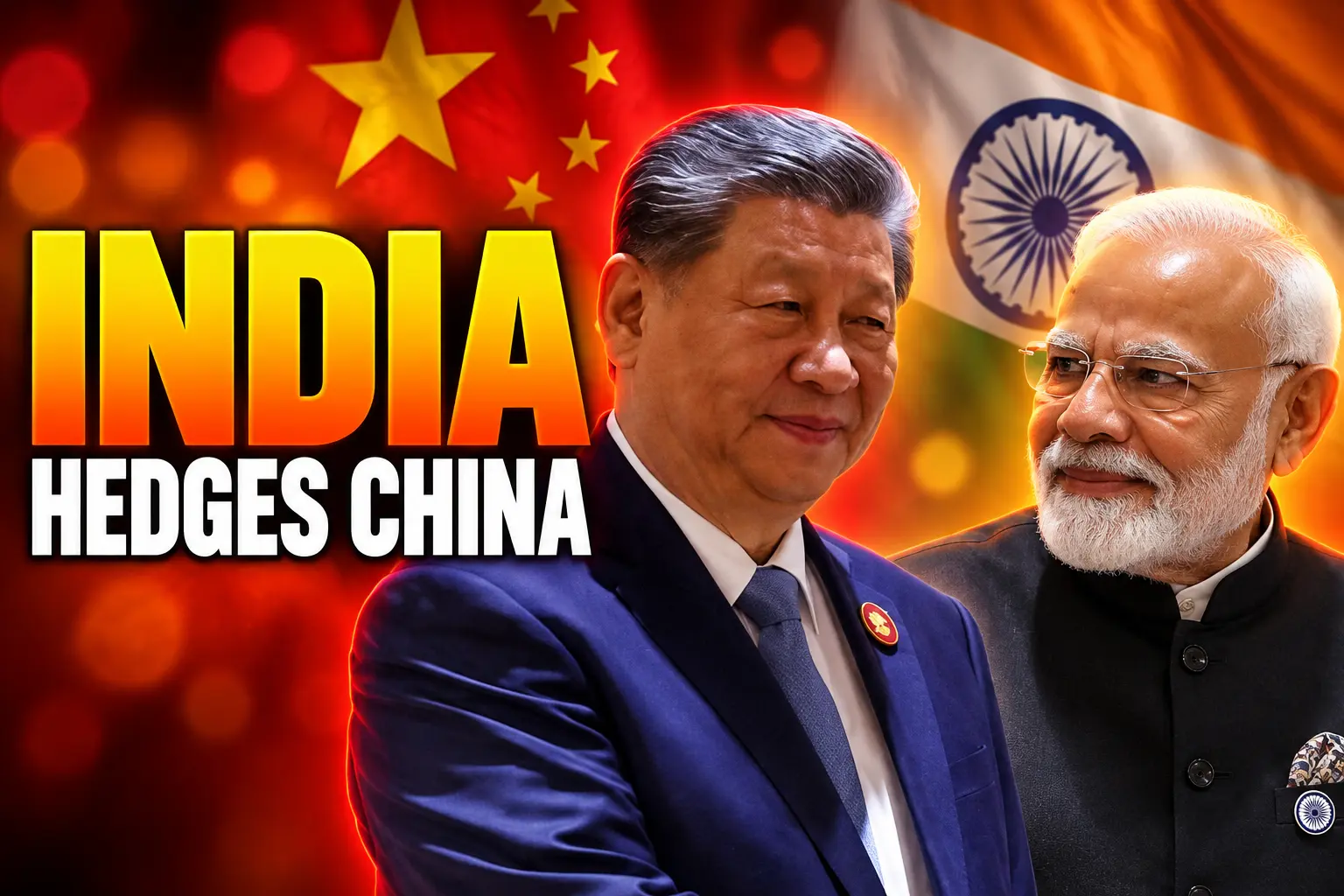
Prime Minister Narendra Modi and Chinese President Xi Jinping met in New Delhi on September 12 and left the boundary question without a timetable. India’s Ministry of External Affairs said peace in the border areas remains an essential basis for ties. China’s foreign ministry put out a longer note built around partnership and a new strategic perception.
The 18th BRICS summit gave both men a stage, a joint photograph at Bharat Mandapam, and a host document. The meeting itself did not move troops, close a $112.16 billion goods gap, or put rare-earth licences on a clock. What India did with the chair, and with a trade-pact web it has spent five years building, is the part of the visit that will still be in force when the motorcades are gone.
Two Readouts of the Same Hour
Modi’s office said the two leaders reviewed the full range of India-China relations on the sidelines of the Delhi summit and sent good wishes for China’s BRICS presidency in 2027. The Indian statement ran six short paragraphs. It welcomed “steady progress” since they last sat together in Tianjin in August 2025, restated that “differences should not become disputes,” and listed Modi’s three mutuals: mutual respect, mutual sensitivity and mutual interest.
PM @narendramodi and President Xi Jinping met on the sidelines of the Delhi BRICS Summit today. The two leaders reviewed the full range of India-China relations. pic.twitter.com/qxDhxZZe1k
— PMO India (@PMOIndia) September 12, 2026
Beijing’s account was longer and more pointed. Xi said he had met Modi twice in two years and had guided ties “from starting afresh to making further improvements,” a line that folds the October 2024 Kazan meeting and the Tianjin session into one story of repair. He said institutional contacts had resumed, the cooperation list had lengthened, and goods trade had hit a new high. “This situation has not come easily and needs to be cherished,” the Chinese ministry quoted him as saying. Cai Qi, fifth among the seven members of the Communist Party’s Politburo Standing Committee, and Foreign Minister Wang Yi sat in. Xi travelled with a 67-member government delegation and was in the city for less than a day.
XI’S FOUR POINTS
- Direction: Calibrate ties with an objective and rational strategic perception; the two countries are partners, not rivals, and opportunities, not threats.
- Development: Treat growth as the common ground, expand flights and people-to-people contact, and handle trade complaints in a balanced way.
- Interference: Use mutual respect to remove irritants, run the broader relationship and the boundary on parallel tracks, and keep the border calm.
- Multilateral work: Support each other’s BRICS chair, coordinate at the United Nations, the Shanghai Cooperation Organisation and the G20, and “work together in the same boat.”
Chinese Foreign Ministry spokesman Guo Jiakun later said the most important consensus was that China and India should be partners. On September 15, MEA spokesman Randhir Jaiswal told reporters that “several issues” came up, that Modi had referred to Indian concerns, and that the three mutuals still guided the Indian side. The two governments were describing the same hour in different grammars.
India Still Puts the Border First
The Indian statement put the Line of Actual Control in paragraph three and did not bury it. Modi said peace and tranquility in the border areas remains an essential basis for the continued development of relations, and that both sides must observe existing agreements. They restated a “fair, reasonable, and mutually acceptable” settlement of the boundary, drawn from the political view of the overall relationship. That is the formula India has used since the weeks after Galwan.
In June 2020, troops clashed in the Galwan Valley. Twenty Indian soldiers died. China later said four of its soldiers died. Patrol arrangements were eased after Kazan, and both sides have spoken of overall stability. De-induction of the forward deployments built after 2020 is still unfinished. New Delhi has treated calm on that line as the price of a normal political relationship, not as one file among many.
THE MEETINGS THAT GOT THEM TO DELHI
- September 2014: Xi visits Ahmedabad and Delhi at the start of Modi’s first term.
- October 2019: The two hold an informal summit at Mahabalipuram. Xi does not return for India’s G20 in 2023.
- June 2020: The Galwan clash kills 20 Indian soldiers and, by China’s later count, four Chinese soldiers.
- October 2024: On the sidelines of BRICS in Kazan, they set disengagement and patrols back in motion.
- August 2025: They meet again in Tianjin during the Shanghai Cooperation Organisation summit and back each other’s BRICS hosting.
- September 12, 2026: Xi lands in India for the first time in seven years, meets Modi, and leaves the same visit without a border timetable.
Kailash Mansarovar pilgrimages resumed in 2025. Direct flights came back. Those are the easy files. The hard file is still the one Modi put first in the Indian readout.
What Xi Meant by Strategic Perception
Xi’s first point is the one Indian China-watchers have been turning over. He told Modi to calibrate the relationship with an objective and rational strategic perception, a judgment he said was based on “the development stage and international environment of the two countries.” Manoj Kewalramani, who tracks official Chinese language, wrote that the phrase is aimed at Delhi, not at Zhongnanhai: India is being asked to treat the relationship as cooperative rather than competitive, and to do so because of where each economy now sits.
First, calibrate the direction with an objective and rational strategic perception. China and India are partners rather than rivals, and development opportunities rather than threats to each other. This is a strategic judgment made based on the development stage and international environment of the two countries, and one that conforms to the common interests of the two countries and the two peoples.
Xi Jinping, President of China, Ministry of Foreign Affairs readout, New Delhi, September 12, 2026
The third Chinese point asked both sides to “remove irritants” and to advance the broader relationship and the boundary on twin tracks that reinforce each other. That is the opposite sequence from the Indian one. Delhi says the border is the basis. Beijing says the two tracks should move together, and that “interference” should come out of the way. The Chinese text also has Modi saying India’s policy on Taiwan and Tibet is unchanged and that India will not allow anti-China activity on its soil. The Indian readout does not carry those sentences. Jaiswal, asked about them three days later, would only say that several issues were discussed and that Modi had asked for sensitivity to core concerns.
Srikanth Kondapalli, professor of Chinese studies at Jawaharlal Nehru University, read the cognition line as a polished form of coercive diplomacy: a reminder that China can stir the border, squeeze rare-earth shipments, and lean on India in regional forums. The Chinese text, on its face, is warmer than that. The sequencing fight inside it is not.
The Host Text That Would Not Back the Renminbi
The New Delhi Declaration was adopted unanimously on September 12 by the 11-member grouping. It is the document India could draft as chair. It did not name China. It did not have to.
WHAT THE DECLARATION DID
- Critical minerals: Leaders called for “reliable, responsible, diversified, resilient, fair, sustainable, and just” supply chains, with value addition in the countries that dig the ore and with sovereign rights left intact.
- Payments: The BRICS Payment Task Force was told to keep working on faster, cheaper cross-border payments in local currencies, with “no one-size-fits-all approach” and respect for national priorities.
- No common currency: The text did not endorse a BRICS unit, a renminbi settlement standard, or a dollar replacement.
On September 13, in a session on resilience and innovation, Modi said the “weaponisation of technology and critical minerals can hinder our shared progress,” and that the group had stressed inclusivity in the adoption of technology. He did not name a country. He did not need to. The closed-door fight some commentators described, with Modi pressing Xi on mineral controls, fits the public sentence he then put on the record. Xi answered with five BRICS initiatives on AI, trade, the digital economy, smart manufacturing and talent, and confirmed that China will host in 2027. The joint text stayed polite. The plenary line did not.
Reading that line as a rebuke is straightforward, because China still dominates magnet rare earths. Reading it as India wrecking BRICS misses the narrower play. The host needed a sentence the communique would not carry, and he used the open session to say it. Xi’s warning about third-party “interference,” and the Chinese claim that Modi said ties with China are not affected by any third party, sit on the other side of the same argument.
A $112.16 Billion Gap After the Handshake
The economic paragraph in the Indian readout asked both sides to address “structural trade imbalance and supply chain issues” and to ease “meaningful and predictable market access.” Xi’s second point said the same thing in softer words: handle each other’s trade concerns in a balanced way. Neither side published a target, a tariff list, or a licence timetable.
Department of Commerce figures for 2025-26 show why the paragraph exists. India sold China $19.47 billion of goods, up 36.62 percent from $14.25 billion. It bought $131.63 billion, up 16.03 percent from $113.46 billion. Total goods trade reached $151.10 billion. The deficit was a record $112.16 billion, up from $99.21 billion in 2024-25 and $73.31 billion in 2021-22. China took about 17 percent of India’s merchandise imports and about 4.4 percent of its exports, and has been India’s largest goods trading partner on those numbers.
INDIA-CHINA GOODS TRADE
| Fiscal year | Exports to China | Imports from China | Deficit |
|---|---|---|---|
| 2021-22 | – | – | $73.31 billion |
| 2024-25 | $14.25 billion | $113.46 billion | $99.21 billion |
| 2025-26 | $19.47 billion | $131.63 billion | $112.16 billion |
The gap has kept widening into the current year. From April to August 2026, imports from China were $65.49 billion, up more than 27 percent, while exports were $9.61 billion, up 38.71 percent from $6.93 billion. The five-month deficit was about $56 billion. Engineering goods, electronics, petroleum products and chemicals led the export rise. The import bill is still dominated by industrial inputs, capital equipment, electronics, chemicals and the critical minerals that feed electric vehicles, grids and factories.
Piyush Goyal, the commerce and industry minister, sat down with Chinese Commerce Minister Wang Wentao after the leaders’ meeting. Commerce Secretary Rajesh Agrawal said on September 15 that both sides were engaging “with a positive bent of mind,” that this was a first meeting, and that more would follow on the shape of the imbalance, supply chains and trust.
Rare Earth Magnets Still Need Chinese Export Permits
The supply-chain clause is not a slogan. On April 4, 2025, China’s commerce ministry and customs put export licences on seven medium and heavy rare earths, including dysprosium and terbium, and on related magnets. Shipments collapsed that spring. Carmakers in India, Japan, Europe and the United States queued for permits. Some Indian firms had applications refused. Licences later began to move, case by case, including for suppliers tied to Maruti Suzuki, Mahindra and Honda, but the April 2025 framework was not lifted. Further controls followed on October 9, 2025.
CHINA’S SHARE OF MAGNET RARE EARTHS
- Mining, 2024: China accounted for around 60 percent of global output of the rare earths used in magnets, with Myanmar, Australia and the United States far behind, the International Energy Agency found.
- Refining: China held about 91 percent of global refining of those magnet rare earths, with Malaysia a distant second.
- Magnets: China’s share of sintered permanent magnets has risen to 94 percent, from around 50 percent two decades ago.
- The wider map: For 19 of 20 strategic minerals the IEA tracks, China is the leading refiner, with an average share of 70 percent.
After the April curbs, rare-earth prices in importing countries stayed high, with European prices reaching up to six times the Chinese level. China exported 58,000 tonnes of rare-earth magnets in 2024. That is the choke Modi was talking about without naming it. Western capitals have put a number on the same fear. G7 leaders in June set a target to cut rare-earth dependence under 60 percent by 2030, with an ambition to reach 50 percent.
India’s parallel move is a web of trade pacts. Commerce Minister Piyush Goyal said in February that India had concluded nine comprehensive free trade agreements covering 38 countries. The Department of Commerce listed the recent set as the UAE CEPA, the Australia ECTA, the EFTA TEPA (in force from October 1, 2025), the UK CETA, the Oman CEPA, the New Zealand FTA and the EU FTA announced in 2026. The UK deal entered into force on July 15, 2026. Defence Minister Rajnath Singh repeated the 38-country figure on September 9. Agrawal said on September 16 that the New Zealand pact is due in late October and that the EU deal, concluded on January 27, 2026, is due to be signed at the end of 2026.
Those pacts do not replace Chinese magnets, lithium chemicals or machine tools. They are how New Delhi is trying to buy time: more markets for Indian goods, more room to bargain with Beijing, less of the relationship sitting on a single licence window.
Commerce Talks Began Once the Motorcades Left
The visit did what a one-day stop on a summit calendar can do. It produced photographs, matching sentences about a long-term view, and a Chinese claim of partnership that the Indian spokesman would not relitigate word for word. It did not produce a border schedule, a deficit path, or a rare-earth licence reform. China takes the BRICS chair in 2027. Agrawal said further trade meetings are coming. The September 12 readouts still do not agree on which track moves first.

Cinépolis and a Young Producer Kept Hanuman Ansh Running

Warlock Bets a D&D Open World Can Live Without Waypoints

Rajinikanth’s Call Seals Soori’s Bet on Mandaadi

Level-5 Turned Its Comeback Stream Into an AI Apology

Suriya and Jyotika Restage Their Wedding as The Sequel

Generation Lab’s Secret Youth Shot Has a Copycat Problem

Tesla Raises Dual Motor Prices as Texas Builds Cybercabs

Okta Stock Jumps 20% on McKinnon’s Identity Bet

Bristol Myers Quits Cellares as Autoimmune Doses Proceed

The Nantucket Friendship Basket Boom Meets a Maker Shortage
-
 NEWS1 month ago
Generation Lab’s Secret Youth Shot Has a Copycat Problem
-
 AUTO1 month ago
Tesla Raises Dual Motor Prices as Texas Builds Cybercabs
-
 NEWS1 month ago
Okta Stock Jumps 20% on McKinnon’s Identity Bet
-
 BUSINESS1 month ago
Bristol Myers Quits Cellares as Autoimmune Doses Proceed
-
 LIFESTYLE2 months ago
The Nantucket Friendship Basket Boom Meets a Maker Shortage
-

 LIFESTYLE1 month ago
Labor Day Mattress Sales Repeat a Familiar Holiday Discount
-

 NEWS1 month ago
Google Ends EU Spam Demotions but Keeps the Ranking Split
-

 BUSINESS2 months ago
Poland Closes Visa-Free Work for Three Fast-Growing Nationalities