
LIFESTYLE
The Court Quashed the CJP Cases and Kept 2,873
India’s Supreme Court wiped July protest FIRs nationwide, then left Delhi Police a fresh case against 2,873 people and three months to write suicide-family pay.

The Supreme Court on Tuesday quashed every FIR from the July 20 to 25 student protests, then allowed Delhi Police a fresh case against 2,873 people. Cockroach Janta Party leaders called off Friday’s Delhi march the same afternoon. Families of students who died by suicide after the NEET-UG leak still wait on a pay policy the Centre has three months to write.
Chief Justice Surya Kant, sitting with Justices Joymalya Bagchi and V. Mohana, used Article 142 and called the wipe a “healing balm” for young protesters. The leftover file is not a footnote. It is a new case the police had not even registered when the bench rose.
A Nationwide Quash That Still Leaves a Mass Case
Solicitor General Tushar Mehta told the bench the Union had given three assurances in July: the July 20 to 25 cases would not be pursued, no fresh FIR would be filed over those events, and families of students who died by suicide would be paid. Delhi Police, Maharashtra, Bihar, Assam and West Bengal filed matching applications. Madhya Pradesh and Uttar Pradesh had cases too and had not come to court, Mehta said, so the bench stretched the order to every state and Union Territory.
THE ORDER IN PLAIN TERMS
- July 20 to 25 FIRs: They shall not be pursued or investigated and stand closed for all intents and purposes, including cases never listed before the court.
- New cases on those dates: No state or Union Territory may register a fresh FIR over the same protest events.
- The exception: Delhi Police may register one new FIR against 2,873 people with serious prior cases who were reported present at Jantar Mantar.
- The money: The Union must frame a pan-India pay policy within three months and then pay families of students who died by suicide in connection with NEET-UG 2026.
The bench said it was acting “keeping in view the future” of young people who “bonafidely came to protest.” Participating in a protest, it noted, is not an offence in itself. It also said the order rests on “peculiar facts and circumstances” and “shall not be treated as a precedent.” Both sides must keep the understanding they spoke in court. Kant told the students to concentrate on studies and on building careers, because “life is otherwise not easy to establish and create a space for oneself.”
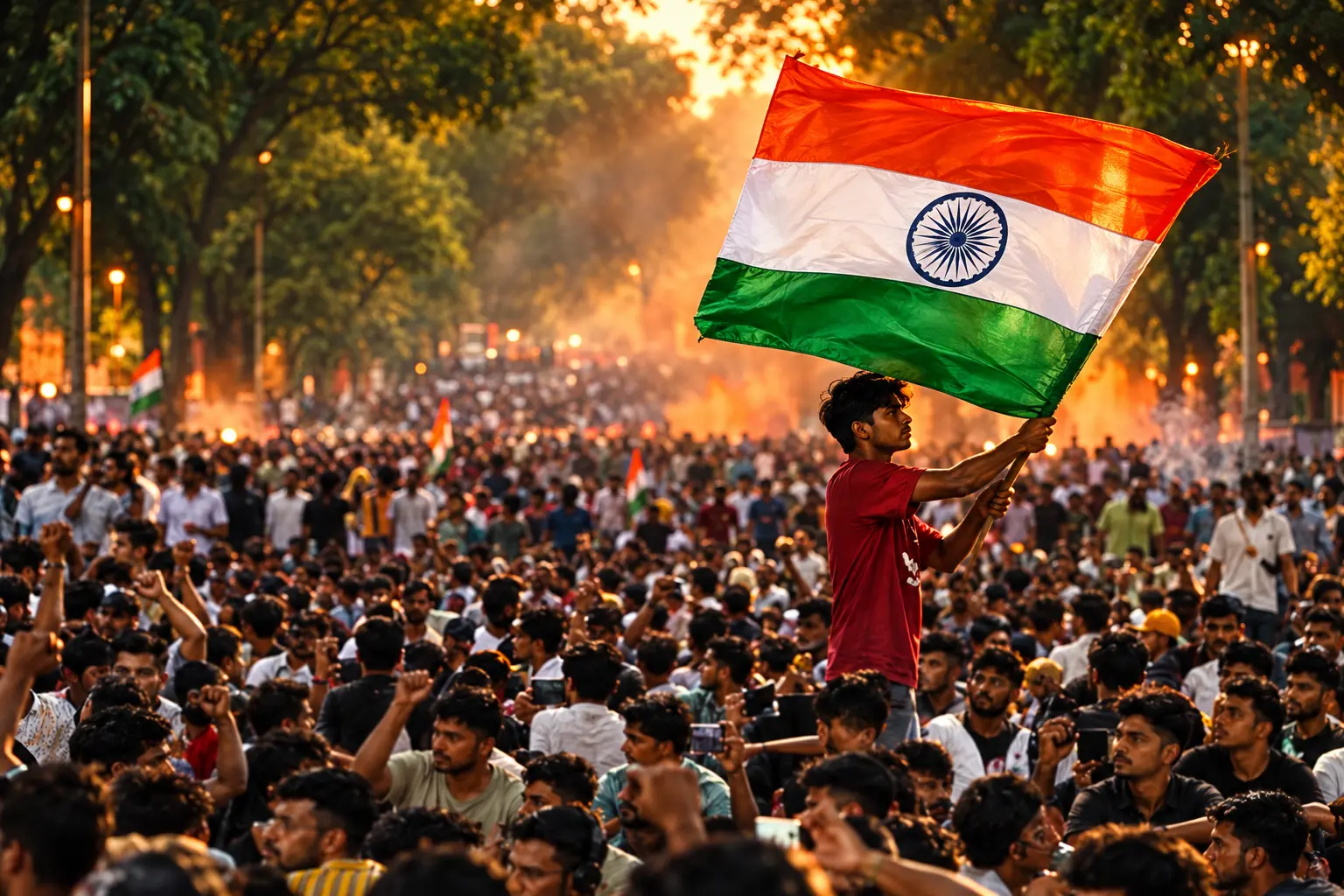
2,873 People Stay on the Books
Delhi Police told the court it no longer wanted the 13 protest FIRs on its own books. In the same application it asked leave to open a new, specific case against 2,873 people who, on the National Crime Records Bureau database, had serious prior cases and were “prima-facie reported to be present” at the site. When Kant asked whether that FIR already existed, Mehta said it did not.
The alleged prior cases were not petty. Police described them as murder, attempt to murder, dacoity, rape and POCSO offences. Mehta said the new investigation would not be for joining the protest. It would be limited to bodily harm or destruction of property. Kant answered that the state’s right to prosecute “the allegedly provoking elements” had to sit beside the balm. “We don’t say they are offenders. Allegedly,” he said. He also said the court did not have enough material to find that the whole crowd had been infiltrated.
CLOSED FILES AND THE FILE THAT STAYS
| Track | What the bench did | Who is covered |
|---|---|---|
| Protest FIRs, July 20 to 25 | Closed nationwide, including states not in court | Students who joined the protests |
| Future FIRs on those dates | Barred | Every state and Union Territory |
| Fresh Delhi FIR | Allowed, limited to bodily harm and property damage | 2,873 people with serious prior cases, reported present at Jantar Mantar |
Senior advocate N. Hariharan asked for copies of the FIRs and for the 2,873 names, saying a number without a list told the court nothing. Kant directed that the list be filed. Advocate Vrinda Grover, appearing for petitioners, pointed out that the 2,873 were only said to have been present, not shown to have committed an offence at the protest. Facial recognition was the starting match. An old NCRB hit plus a camera tag is a wide net, and until the list is on the record nobody in court can say how many of those names have anything to do with July 20.
CJP co-convenor Saurav Das did not fight the exception. He told reporters the group had argued that if so many people with grave records were at Jantar Mantar, the first question was why they were free in the first place, and the second was that anyone who committed a heinous crime at the site should be investigated. That argument lets CJP claim a clean win while police keep a mass case that can still be opened. Replies to Das’s victory post went straight to the same hole: the 2,873 were never in the wipe.
Suicide Families Wait for a Policy
The money track is slower than the criminal one. CJP’s July demand was Rs 1 crore per family. Union ministers had spoken of pay “in principle” and of “maximum compensation in accordance with the rules.” Tuesday’s order names no rupee figure. Mehta asked for three months to work out modalities. Kant asked about “those unseen victims, those who have not been able to bring their claims.” The direction that followed was a pan-India policy, circulated to states, with payment after the policy exists, inside three months.
Das has told supporters the court made a three-month credit to families binding. The bench’s words are tighter than that slogan. They bind a policy first. The sum, the proof a death is tied to the leak, and the route into a bank account are still unwritten. That is why the leftover criminal file and the unwritten cheque belong in the same story. One side of the July 25 deal was performed in open court in a day. The other was sent to a drafting table.
I wasn’t there for compensation. I wanted accountability.
Prashant Patel, father of Kahaan Patel, speaking after the July protests
Kahaan Patel, 17, jumped from his family’s Ahmedabad building on June 18, three days before the NEET-UG retest. He was one of at least 21 students who died by suicide after the May 3 paper was cancelled and nearly two million candidates were told to sit again on June 21, a tally published in early August. His father later went to Delhi and stood with the students. In Rajasthan’s Jhunjhunu district, farmer Rajesh Kumar had sold land and borrowed more than a million rupees so his son Pradeep, 23, could chase a government medical seat. Pradeep died on May 15. “The government snatched away my son,” Rajesh said. “If the paper had not leaked, Pradeep would be alive today.”
A 36-Day Sit-In Forced a Minister Out
The FIRs exist because the sit-in did not stay online. After the National Testing Agency cancelled NEET-UG, Abhijeet Dipke, a 30-year-old Boston University graduate, turned a satirical “Cockroach Janta Party” page into a street campaign. The Jantar Mantar occupation began on June 20. Sonam Wangchuk joined with a hunger strike. On July 20 the group tried to march on Parliament under the slogan Chalo Sansad. Police used tear gas and batons. Smaller protests ran in other cities.
THE ROAD FROM THE LEAK TO THE BENCH
- May 3, 2026: Nearly two million candidates sit NEET-UG. The paper is later cancelled over a leak, with a retest set for June 21.
- June 20, 2026: CJP’s sit-in begins at Jantar Mantar, demanding Education Minister Dharmendra Pradhan’s resignation, pay for suicide families, and no cases against protesters.
- July 20, 2026: The Chalo Sansad march toward Parliament is stopped with tear gas and batons; FIRs follow in Delhi and other states.
- July 25, 2026: Pradhan resigns after 36 days. The Union accepts, in principle, FIR withdrawal and family pay. CJP tells crowds to go home.
- September 1, 2026: The Supreme Court, on applications from the Centre and four states, quashes the July 20 to 25 FIRs nationwide and leaves the 2,873-person exception. CJP withdraws the September 5 march.
By late August the first promise, Pradhan’s exit, was old news and the other two were not done. That lag, 38 days after July 25, is why CJP had called a September 5 march from India Gate to the police headquarters, with families told they would walk too. Days before Tuesday, the court had refused to stop that march. The government then did in the courtroom what a ban could not do on the street: it asked for the cases to die, and it asked Das to say the march was off.
Why the Government Asked the Court to Do It
If a government wants cases dropped, why walk them into the Supreme Court? States can close or withdraw FIRs in the ordinary way, and the bench had already said in August that they were free to do so for protesters who were not accused of grave crimes. A mass, all-India wipe, including cases nobody had listed, is harder. Mehta asked the court to use Article 142, the clause that lets it complete justice in any cause pending before it. Justice Bagchi said the point was to stop people being prosecuted merely for having been in the protest. “We want to put these matters to rest and not keep the pot boiling,” he said.
That is the history of complete justice as a tool for outcomes the usual machinery cannot finish in one sitting. Das later called it a “John Doe” style quashing that would catch FIRs missing from the government’s own charts, and said more than 130 FIRs had gone in a day. That 130-plus figure is his tally, not a number the bench read out. Constitutional lawyer Gautam Bhatia, writing the morning after, placed the same order in the realm of pure discretion. The court wrote a one-time peace and warned the next crowd not to treat it as law.
Mehta, asked about trust, said both sides had been constructive. “We are not adversaries,” he said. Kant told them that if they showed good faith, issues could be solved one by one. The line sounds gentle until it is set against the leftover FIR and the unwritten policy. The peace is real for students whose names die with the old cases. It is paper for anyone on the 2,873 list, and it is a calendar for the families.
CJP Packs Up the September 5 March
Das stood in court and read the withdrawal. “In view of the positive assurances of the Government of India and the judicial sanctity bestowed upon them today, and in view of the order being passed by this Court, the CJP deems it appropriate to withdraw the call for the march on September 5 and looks forward to compliance with today’s order,” he said. He called the day historic. Kant said the credit went to both sides. The Union, Das later told supporters, had requested that statement. CJP accepted “in good faith.”
Important Update🚨
The September 5 India Gate protest is called off.
The Supreme Court has quashed all FIRs against students protesting at Jantar Mantar, with no future FIRs to be filed, and a 90-day deadline has been set for providing compensation to the families of students…
— Cockroach Janta Party – CJP (@Cockroachisback) September 1, 2026
On the party’s official account the march is already in the past tense, the FIRs are gone, and the three-month clock is the remaining watch. That is the bargain as CJP wants it scored. The sharper reading is plainer. The court would not block Friday’s march. The government bought the cancellation with a nationwide close it had promised on July 25, kept a mass case the cameras and the crime database can still feed, and moved family pay onto a policy that does not yet name a rupee.
Friday’s route from India Gate is empty. The 2,873-person file still has to be opened, and the names still have to be shown. The families are waiting on a draft.
Disclaimer: This article is news reporting and analysis of a Supreme Court order and related public statements. It is informational only and is not legal advice, medical advice, or guidance on any compensation claim. Readers who may be named in an FIR, or families considering a claim, should consult a qualified advocate and, where distress or self-harm is involved, a licensed mental health professional before acting. Figures, case statuses and timelines reflect the court record and public statements as of September 2, 2026, and may change as the fresh FIR, the name list and the pay policy move.

John Mayer Bets Sob Rock Can Be a Record Label

H1N1 Rises Early After Last Winter’s H3N2 Wave

Human Fires Drive Amazon Carbon Emissions Even Without Drought

Charli XCX Secretly Films a Cameo in Scorsese’s Horror

Santos’s 58-Yard Kick Decides the Williams-Maye Rematch

Tesla Raises Dual Motor Prices as Texas Builds Cybercabs

Generation Lab’s Secret Youth Shot Has a Copycat Problem

The Nantucket Friendship Basket Boom Meets a Maker Shortage

Bristol Myers Quits Cellares as Autoimmune Doses Proceed

Okta Stock Jumps 20% on McKinnon’s Identity Bet
-
 NEWS2 months ago
Generation Lab’s Secret Youth Shot Has a Copycat Problem
-
 AUTO2 months ago
Tesla Raises Dual Motor Prices as Texas Builds Cybercabs
-
 LIFESTYLE2 months ago
The Nantucket Friendship Basket Boom Meets a Maker Shortage
-
 BUSINESS2 months ago
Bristol Myers Quits Cellares as Autoimmune Doses Proceed
-
 NEWS2 months ago
Okta Stock Jumps 20% on McKinnon’s Identity Bet
-

 BUSINESS2 months ago
Poland Closes Visa-Free Work for Three Fast-Growing Nationalities
-

 LIFESTYLE2 months ago
Labor Day Mattress Sales Repeat a Familiar Holiday Discount
-

 NEWS2 months ago
Ox Alpha Was a Chinese Chip Stress Test All Along